Meet Gretchen

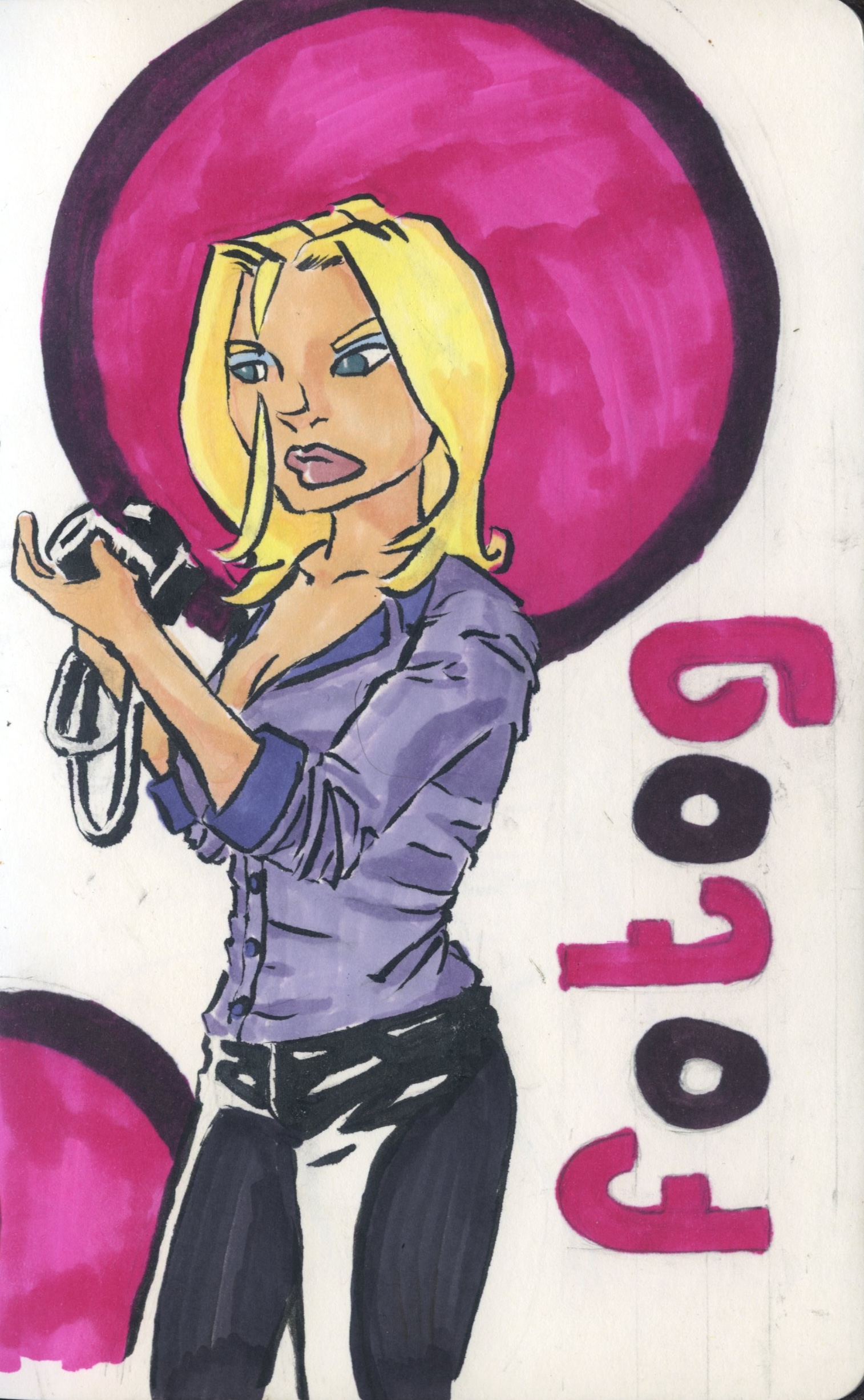
Gretchen West is a former intern at a sleazy New York City tabloid who graduated to fotog. She’s a bombshell, she doesn’t have an insincere bone in her body, and she’s actually a really good photographer. She balances out her good points by being really obnoxious. She is a gum-chewer, a belcher, and a knuckle-cracker. She can unleash a silent-but-violent at will. And her laugh. Oh, God, her laugh.

Words, Words, Words

If there’s one thing people know about me, it’s that I’m a writer. This goes all the way back to the fifth grade when I wrote my first short story, a Top Gun fan fiction. I showed it to my dad, and he had notes. Everyone’s a critic.

I have over thirty novels to my name, as well as countless short stories, a well-curated folder of most of my essays and blog entries, as well as a memoir and whatever the fuck “Three Stories in One” is supposed to be. Between “Three Stories in One” and my school newspaper column, writing made me a celebrity in high school. I went to college to learn to write. I moved to New York to become a writer, and while I didn’t become published, I certainly enjoyed the craft.

My marriage was great for me as a writer because she had an idea for a novel (I’d only written short stories so far), she got a lead on a contest I ultimately did pretty well in, and she bullied me into submitting my work. Ten short stories were published in various anthologies, but I got over sixty rejections on a novel I wrote by accident while she was in Namibia.

That basically stopped me from writing until seven years ago, when I entered another season of the contest and decided that I was going to write a novel. I did. And then I wrote the next one. I wrote the novels to write them, and I wasn’t going to kill my self-esteem with dozens more rejection letters. I tried again, though, submitting my best novel so far, but after thirty-plus rejections and Covid, I gave up.

Years later, I saw an ad for a writing service. Among the their many offerings is help (from agents and editors) with writing your query letters and synopses, copyediting your samples, and helping find the agents and publishers your work is the best match for. I purchased all of these. They found me five agents and five publishers because I didn’t want more than ten rejections. I got nine. The tenth should be publishing me in a few months.

If there’s two things about me that people know, it’s that I’m a writer and a Doctor Who fan from way back. I grew up with Classic Who, where the effects were cheap (but very imaginative), the acting was not Method, and the serials were always one or two episodes too long. Then it got cancelled, and seven years later, there was a movie with flashy effects and motorcycle chases. When that went over like a fart in a car, they rebooted the series nine years later, and it runs to this very day.

I’ve loyally watched all of NuWho (or Who Redux) as they have gone from Doctor to Doctor and showrunner to showrunner. Prior to last year, the latter was Chris Chibnall. It did not go over well. It started going badly before his era even began because the Doctor was going to be played by an icky girl. I defended Chris Chibnall from the Doctor-Who-not-Nurse-Who/Go-Woke-go-broke contingent who were complaining about the writing so they could mask their sexism. However, I wasn’t enjoying the show anymore. When it wasn’t completely forgettable, the mythos was being torn down, and the character was being stripped of everything I loved about them. The problem was indeed the writing. As a writer, I’m not happy to say this.

When a project goes wrong, especially on TV, it’s almost always the writers. And considering how much people complain about the writing, it’s no wonder the studios want to use AIs to do it.

Movie and TV writing are not art; they’re science. In a movie, you must, by around page 55, have some kind of major conflict. And the audience is so trained to expect this that The Avengers dragged a little in the middle because the epic fight on the Helicarrier took place on page 70. If characters don’t hit their beats like they’re supposed to, people can’t handle it. Look at the reaction to The Last Jedi. I tried writing a pilot, but I couldn’t make it fit into five acts.

Movies have endless script doctors fine-tuning every little thing. A sitcom will have rooms full of writers, fine-tuning every single joke. Producers and studios give their input. Actors love to give their input too, sometimes rewriting their lines. A producer (or a comic book editor) will have an idea, and they’ll make a writer make it happen. The writers everyone is complaining about are a committee, about as far from the process of writing I enjoy.

Don’t get me wrong—I love a good collaboration. Some of my favorite memories are sitting in Shane’s studio, bouncing ideas off of each other and creating a screenplay and a lost screenplay. But that’s not what happens. In movie and TV writing, someone is always reading over your shoulder and telling you they can do it better, unless you’re Neil Gaiman.

I used to want to be Joss Whedon (before we found out he was a violent creep) because he had made a brand for himself. He had fans who would watch anything he wrote, even Dollhouse. They picked apart his mythology, they obsessively watched for Easter eggs. I wish someone would do that to my stuff. Yeah, it would be great to have fans. I wish my other twenty-nine novels had readers.

On the other hand, I sit here in my cozy apartment with my swiftly growing cat, living my life with (mostly) peace and contentment. How miserable would I be if I were a professional writer?

If I were a novelist, I would still need a job because authors get paid shit (there’s a finite amount of money for authors, and it’s all going to JK Rowling). If I were a TV writer, I’d have to hustle just to make minimum wage while the studios figured out ways not to pay me, and I’d have to share my inspiration with a crowd and a belligerent showrunner. If I were a movie writer, the screenplay I poured my life into is going to be ripped up and reassembled, so I won’t recognize it.

The Princess Bride is a classic because of the performances and the art direction and costuming and sets, all brought together by Ron Howard, but every single quirk, every single quotable line came from William Goldman. You can’t have a movie, TV show, or comic book without the writing (though the founders of Image Comics gave it their best shot), but people don’t notice unless it’s bad.

I’m living my best life right now. I’m not famous, and maybe that’s okay. I used to feel like I was supposed to have a bestseller for my twentieth high school reunion, but I don’t want to hand over parts of my soul to people who have no respect for me. I’m a writer. I write. And that’s good enough for me.
Gods Save the Queen

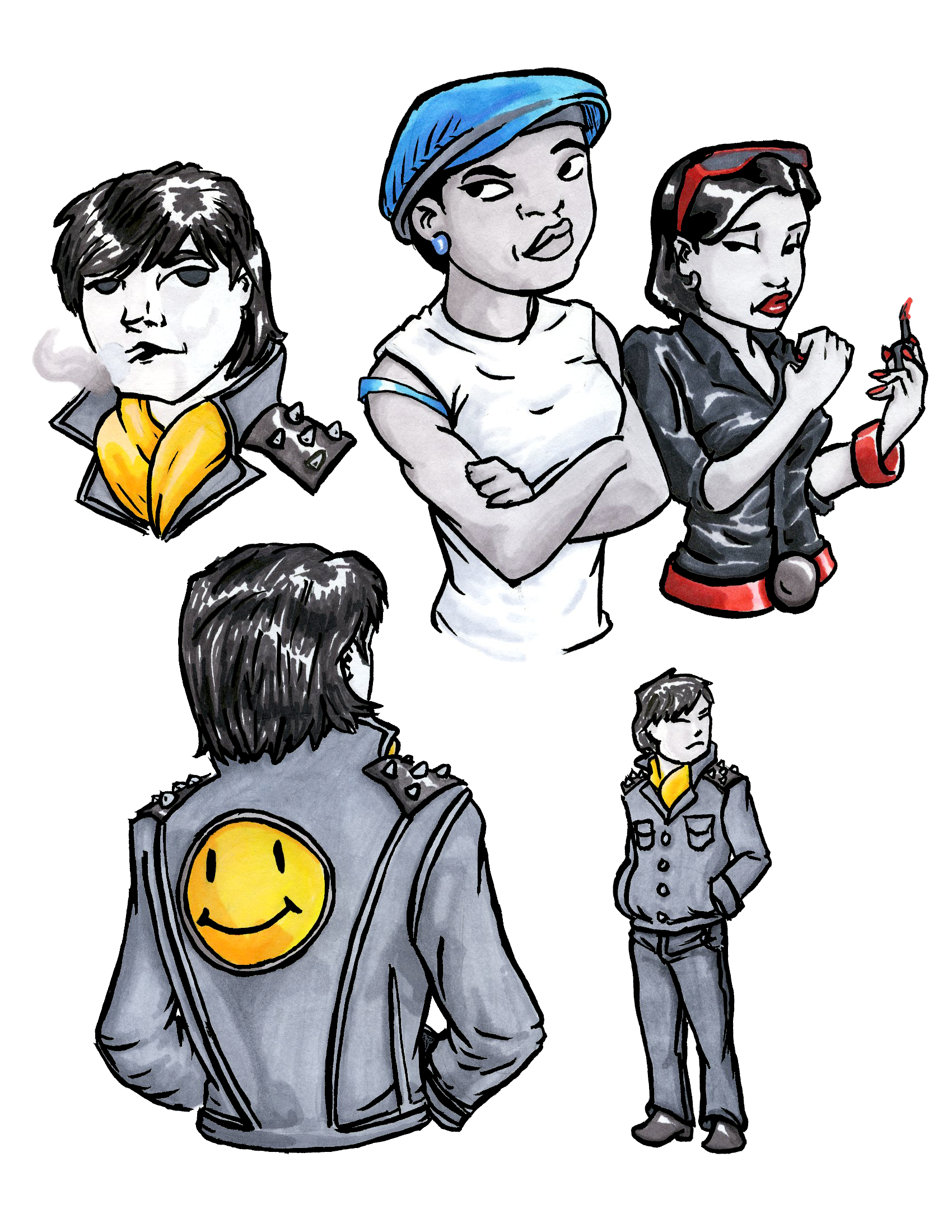
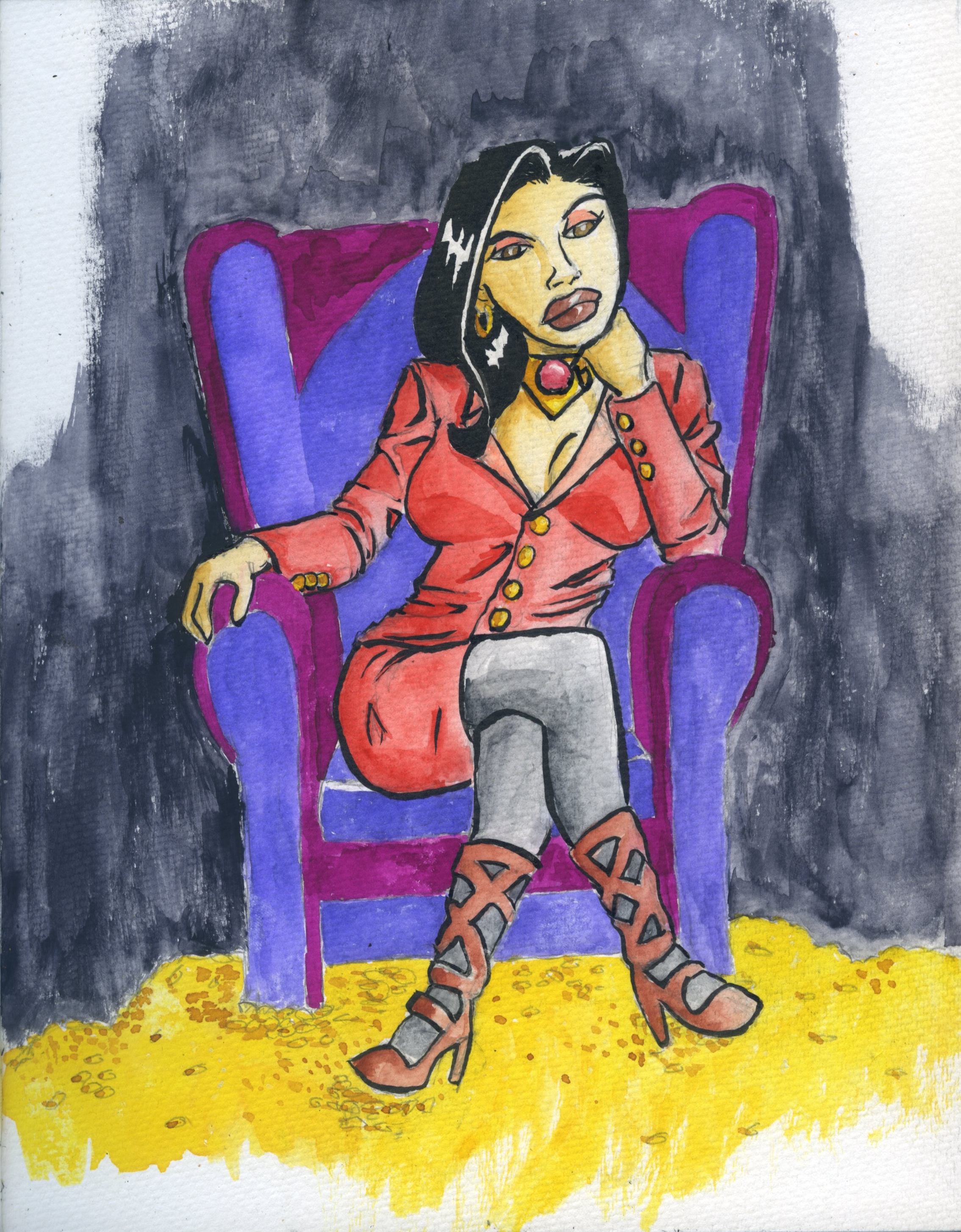
This is Regina de Costa. She was conceived by Kate to be a badass witch named Gina, and her creator asked me to write a novel about her character. I did so, and I added some details of my own.

Regina’s mother is Helena Torres-de Costa, the chief executive officer of a corporation so large and powerful, it has no name. It manipulates politics, sports, pop culture, and finances in order to maximize profit. The corporation is not a democracy, so Regina is heir to the executive office, by virtue of birth, as well as a lifetime of training.

Regina ran away from home twice, once when she was a restless young woman, and once when she was a crusader for justice. She’s clever, she’s ruthless, she’s imaginative, she’s fashionable, she is utterly insane, and she’s a heartbeat away from being the single most powerful person in the United States.

Words, Words, Words

If there’s one thing people know about me, it’s that I’m a writer. This goes all the way back to the fifth grade when I wrote my first short story, a Top Gun fan fiction. I showed it to my dad, and he had notes. Everyone’s a critic.

I have over thirty novels to my name, as well as countless short stories, a well-curated folder of most of my essays and blog entries, as well as a memoir and whatever the fuck “Three Stories in One” is supposed to be. Between “Three Stories in One” and my school newspaper column, writing made me a celebrity in high school. I went to college to learn to write. I moved to New York to become a writer, and while I didn’t become published, I certainly enjoyed the craft.

My marriage was great for me as a writer because she had an idea for a novel (I’d only written short stories so far), she got a lead on a contest I ultimately did pretty well in, and she bullied me into submitting my work. Ten short stories were published in various anthologies, but I got over sixty rejections on a novel I wrote by accident while she was in Namibia.

That basically stopped me from writing until seven years ago, when I entered another season of the contest and decided that I was going to write a novel. I did. And then I wrote the next one. I wrote the novels to write them, and I wasn’t going to kill my self-esteem with dozens more rejection letters. I tried again, submitting my best novel so far, but after thirty-plus rejections, I gave up.

Years later, I saw an ad for a writing service. Among the their many offerings is help (from agents and editors) with writing your query letters and synopses, copyediting for your samples, and help finding the agents and publishers your work is the best match for. I purchased all of these. They found me five agents and five publishers because I didn’t want more than ten rejections. I got nine. The tenth should be publishing me in a few months.

If there’s two things about me that people know, it’s that I’m a writer and a Doctor Who fan from way back. I grew up with Classic Who, where the effects were cheap (but very imaginative), the acting was not Method, and the serials were always one or two episodes too long. Then it got cancelled, and seven years later, there was a movie with flashy effects and motorcycle chases. When that went over like a fart in a car, they rebooted the series nine years later, and it runs to this very day.

I’ve loyally watched all of NuWho (or Who Redux) as they have gone from Doctor to Doctor and showrunner to showrunner. Prior to last year, the latter was Chris Chibnall. It did not go over well. It started going badly before his era even began because the Doctor was going to be played by an icky girl. I defended Chris Chibnall from the Doctor-Who-not-Nurse-Who/Go-Woke-go-broke contingent who were complaining about the writing so they could mask their sexism. However, I wasn’t enjoying the show anymore. When it wasn’t completely forgettable, the mythos was being torn down, and the character was being stripped of everything I loved about them. The problem was indeed the writing. As a writer, I’m not happy to say this.

When a project goes wrong, especially on TV, it’s almost always the writers. And considering how much people complain about the writing, it’s no wonder the studios want to use AIs to do it.

But movie and TV writing is not an art, it’s a science. In a movie, you must, by around page 55, have some kind of conflict. And the audience is so trained to expect this that The Avengers dragged a little in the middle because the epic fight on the Helicarrier took place on page 70. If characters don’t hit their beats like they’re supposed to, people can’t handle it. Look at the reaction to The Last Jedi. I tried writing a pilot, but I couldn’t make it fit into five acts.

Movies have endless script doctors fine-tuning every little thing. A sitcom will have rooms full of writers, fine-tuning every single joke. Producers and studios give their input. Actors love to give their input too, sometimes rewriting their lines. A producer (or a comic book editor) will have an idea, and they’ll make a writer make it happen. The writers everyone is complaining about are a committee, about as far from the process of writing I enjoy.

Don’t get me wrong—I love a good collaboration. Some of my favorite memories are sitting in Shane’s studio, bouncing ideas off of each other and creating a screenplay and a lost screenplay. But that’s not what happens. In movie and TV writing, someone is always reading over your shoulder and telling you they can do it better, unless you’re Neil Gaiman.

I used to want to be Joss Whedon (before we found out he was a violent creep) because he had made a brand for himself. He had fans who would watch anything he wrote, even Dollhouse. They picked apart his mythology, they obsessively watched for Easter eggs. I wish someone would do that to my stuff. Yeah, it would be great to have fans. I wish my other twenty-nine novels had readers.

On the other hand, I sit here in my cozy apartment with my swiftly growing cat, living my life with (mostly) peace and contentment. How miserable would I be if I were a professional writer?

If I were a novelist, I would still need a job because authors get paid shit (there’s a finite amount of money for authors, and it’s all going to JK Rowling). If I were a TV writer, I’d have to hustle just to make minimum wage while the studios figured out ways not to pay me, and I’d have to share my inspiration with a crowd and a belligerent showrunner. If I were a movie writer, the screenplay I poured my life into is going to be ripped up and reassembled, so I won’t recognize it.

The Princess Bride is a classic because of the performances and the art direction and costuming and sets, all brought together by Ron Howard, but every single quirk, every single quotable line came from William Goldman. You can’t have a movie, TV show, or comic book without the writing (though the founders of Image Comics gave it their best shot), but people don’t notice unless it’s bad.

I’m living my best life right now. I’m not famous, and maybe that’s okay. I used to feel like I was supposed to have a bestseller for my twentieth high school reunion, but I don’t want to hand over parts of my soul to people who have no respect for me. I’m a writer. I write. And that’s good enough for me.
That Crazy Witchcraft

My ex-wife is a card-carrying witch. She fancies herself a hedge witch, which means a solitary, standing between her village and the outside world like a hedge. She taught me a lot about magic, and while I don’t believe in it (though I made every effort to), I was fascinated by the lore.

When we were together, we had been working on a book. It was her idea, but I took the characters, added some more detail, and told the story. The novel has two interludes to tell you what happened while they attended a small, Midwestern, liberal arts college like no one I know.

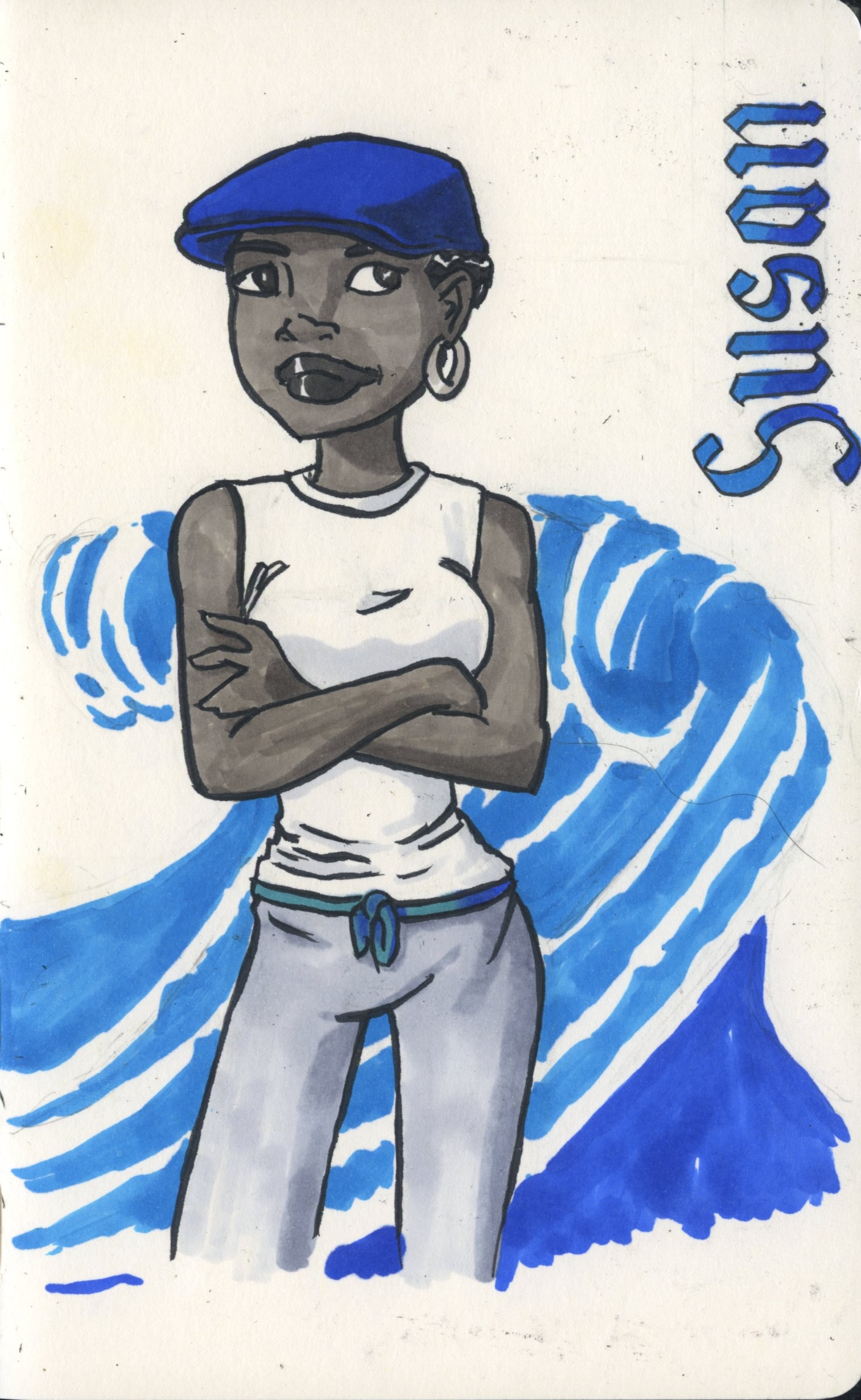
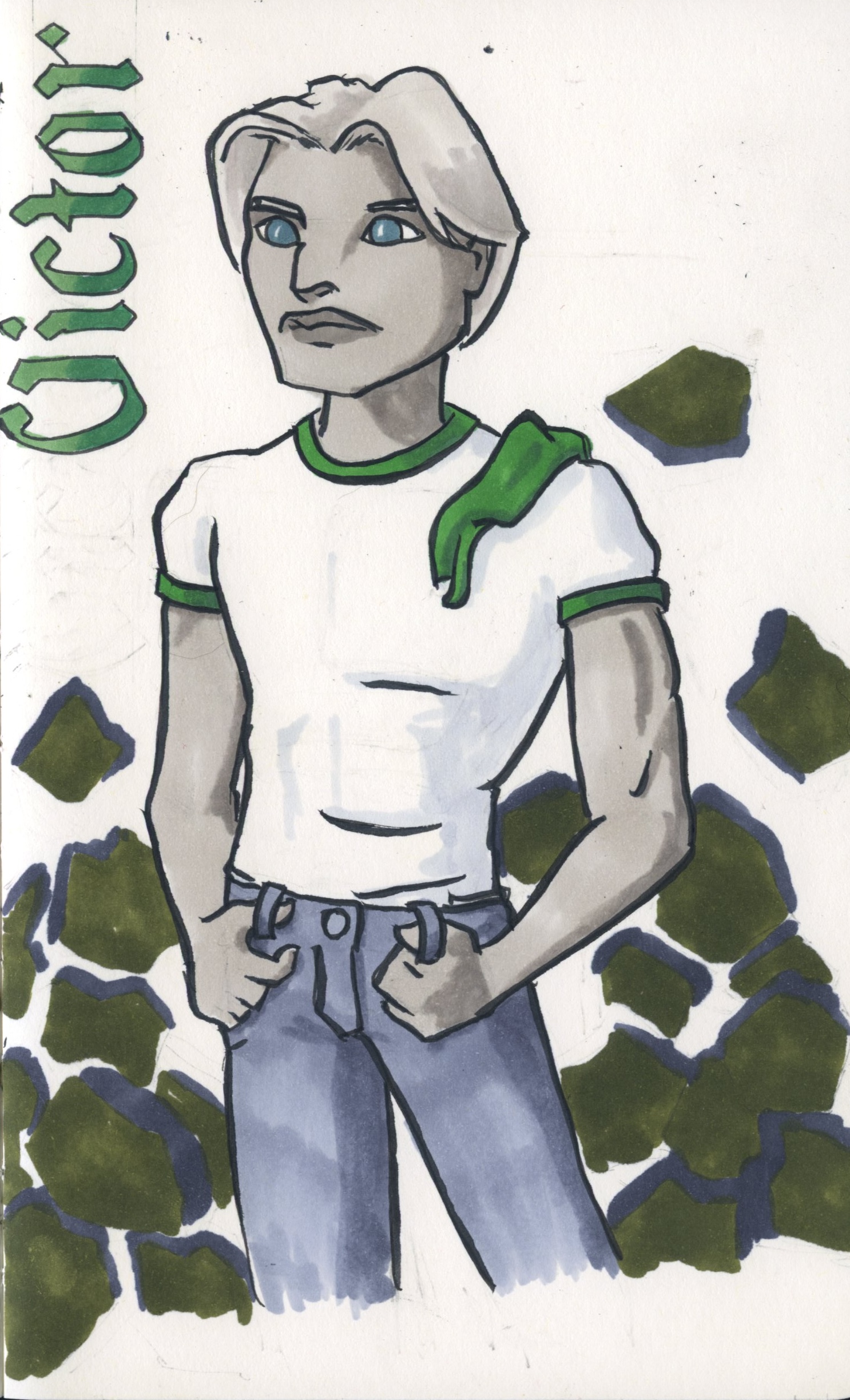
Something I learned about witchcraft or paganism from my ex was that witches had an affinity for one of the elements (air, fire, water, or earth), and that each of the elements has a corresponding color. I did drawings like these before ten years ago, and I wanted to update them for fun. This is most of the 2014 collection:

This is what I just did:

First, we have Jin Harima, a phonomancer, which means sound, preferably music, powers his magic.

This is Regina de Costa, the Secret Princess of the United States, run away from home.

Susan Young is a track star from Gary, Indiana. She’s not really into all this witchy stuff, but she is endlessly fascinated by Regina and will do anything she says.

And finally, Victor Huber, a farmboy and Regina’s protégé.

I haven’t really thought about them since I published their novel three years ago, but this was a nice trip down memory lane.

The Wrath of Gods

According to a philosopher named Giambattista Vico, there are three ages of mankind. In order, they are the age of gods, the age of heroes, and the age of men. I wanted to use this, in reverse order as a framework for three action comics that I would create. The first would be a grounded vigilante story, the second one a straight-up superhero epic, and the third one would bring the first two together in a unified vision of mythology (i.e. all the gods we know from legend are based on the same five beings).

This guy, the hero in the second book and one of the heroes of the third, is a demi-god. He has super-strength, so he wears a metal suit (and pants because he would look ridiculous in a onesie), and he gets around by leaping (the funky boots keep him from smashing the street when he lands).

When I developed him in the late nineties, early aughts, there were no gay superheroes, and that would have made him unique. His nationality is Mexican-American, which wasn’t necessarily unique back then, but it was definitely rare.

Unfortunately, all of the writing I did with the character was lost because Newcastle kept sitting on my laptop twenty years ago. The first image I did this week, using the black, white, and red style. The second I did in 2003, when I became more sure of my skill.

I’m Sorry, Who?

It was going to begin with an exciting pre-credits sequence, and then the title, and then a candy-striper named Andrea in 1999 New York City, looking at a patient’s chart. He’s covered in third-degree burns with a body temperature of 61 degrees Fahrenheit, but he’s not dead. Included on the chart is a note that the patient has a strange heart murmur that creates the illusion of a double-pulse. There’s just one problem: the patient in the bed is a petite, Arabic-looking woman with no burns on her whatsoever. However, when Andrea touches her, her skin is deathly cold, and she has a double-heartbeat. The only conclusion she can reach is that they are the same person. The patient wakes up, looks at her hands, and, speaking in an Irish accent, quizzes Andrea on her own appearance, particularly worried about the size of her nose. She recognizes Andrea from “that coffee house in Lincoln, Nebraska, with the on-the-nose name.” “You mean The Coffee House?” But the only remotely British person she ever met there was a dude with a buzz-cut and an awesome leather jacket. Suddenly, a monster would attack, and the woman would introduce herself as the Doctor. Later, they would head for row of porta-potties, and the Doctor leads her to a really classy, wooden one labeled “Police Box.” When Andrea enters, she sees it’s bigger in the inside than it is on the outside, and her reaction is, “Whoa. Cool outhouse.”

Thus begins “The Tyranny of Occam’s Razor,” the first of my Doctor Who fanfics. I had an overarching plot in mind, which would bring them to America more often than usual, and the monsters would be based on American folklore, including a wendigo, a herd of melonheads, and the men in black. There would be no sonic screwdriver. (As a lifelong Doctor Who fan, I kind of loathe the sonic screwdriver.) I have lot of great gags (“What did your sonic screwdriver do?” “Loosen screws, pick locks, scan things, disrupts a Cyberman’s breathing apparatus, like a regular screwdriver, I reckon.” Also, Andrea, as an American, calls them “Darleks.”) I have done tons of art of the characters, and I even made a logo. I’m going to continue to draw and paint them, but I’m not going to write it anymore.

Since I’ve been making comics or sketching full-time, I haven’t had much inspiration to write. I quit in the middle of a lesbian romance, the seventh book in my YA series, a from-the-ground-up revision of my assassin-that-doesn’t-use-guns-or-martial-arts novel, and the Nth Doctor Adventures short stories. I’ve decided I’m going to box up Who. I loved the concept, I loved my Doctor, I loved her companion, I loved the loose plots, I loved the fan service (one of the pre-credit scenes features a couple being rescued by the Eleventh Doctor, and I think I really nailed his voice), I loved coming up with descriptions of the TARDIS noise (someone driving a power drill through a bucket of fruitcake, an accordion in a dishwasher, a flock of geese flying through a cloud of helium, etc.) but the stories are not good. I made it through three-and-a-half of them, and I just ran out of steam.

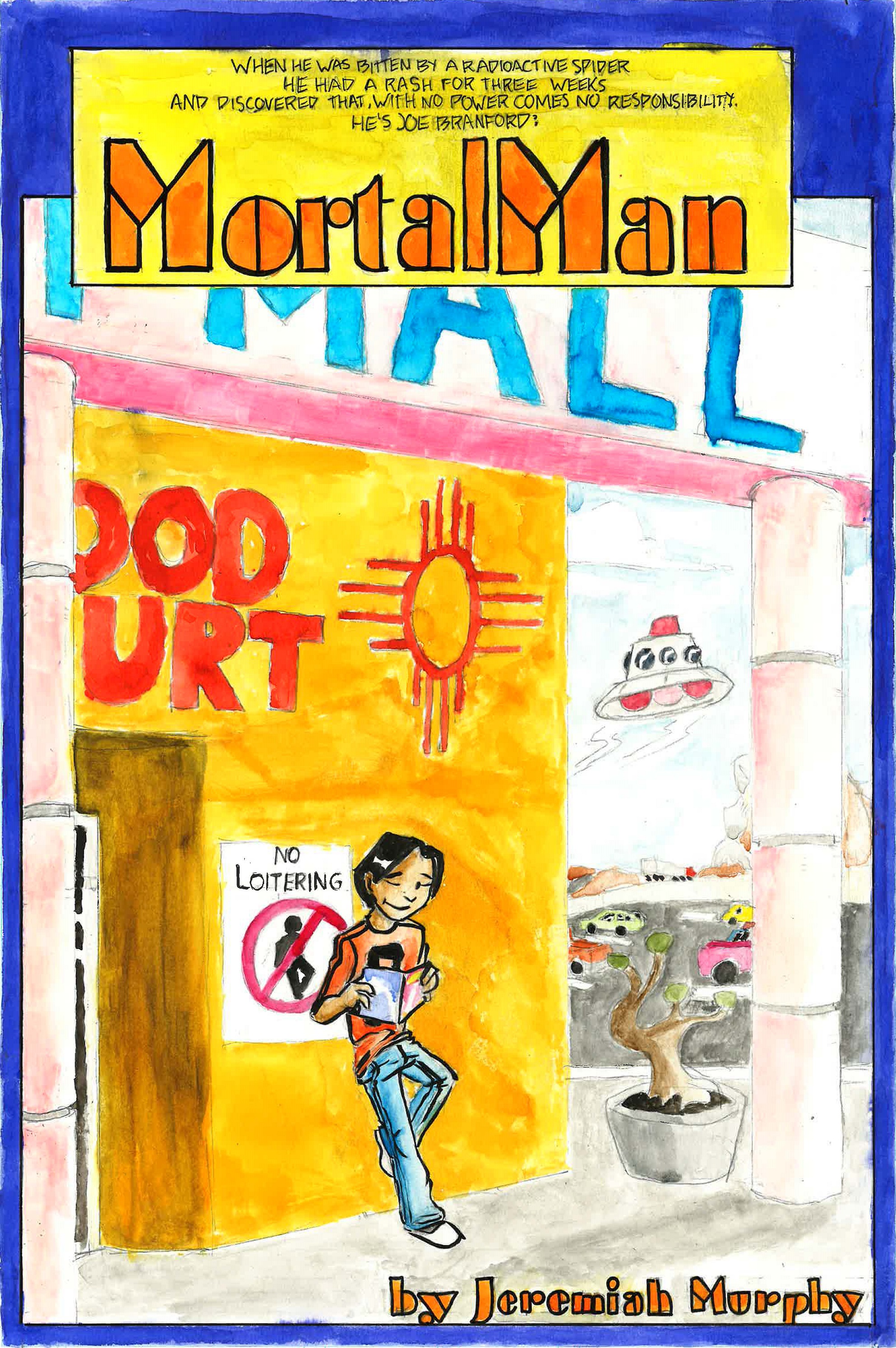
I think I’m going through phases. Eight years ago, I was a voracious reader. Five years ago, I was a writer. A year ago, I was transitioning, and now I’m almost exclusively artist. I can still write, but only about a page or two at a time. (I’ve illustrated up to page 5 of MortalMan, and I only have 9 written.) I might go back to being a writer again, who knows? But while I still pull out Exile Book 7: The Unkindness of Raven, The Principles of Magnetism, or The Sass in Assassin and tinker at them, I think I’m going to leave the Nth Doctor Adventures in storage for now. Doctor Who, after Newcastle, is the love of my life, and I’m going to give them all the attention they deserve.

In the meantime, as I mentioned above, I’m going to keep illustrating the Doctor and Andrea. The Doctor is in a a necktie again, and Andrea has access to infinite outfits in the TARDIS, so she decides that, if she’s exploring the universe, she should at least wear a suit.

I’m the Exact Amount of Sexy for This Song

So I can’t use the lyrics to “I’m too Sexy” in my book. I tried. The publisher told me it could potentially cost thousands of dollars (for fifteen words; yay capitalism!). The first version is almost perfect because it captures that moment when you realize, “I’m going to have to listen to this again.” The second version is lame, so I’m not going to do it. The third version is what I’m going with.

Original Version
Because, just as she was trying to make sense of a geometry problem, the jukebox went off. A deep voice, almost comically so, said, “I’m too sexy for my love; too sexy for my love; love’s going to leave me.” Her head slammed down onto her book. Had they seriously not updated the jukebox for ten years, but when this song came out, they thought, this was the one? This was the music they wanted everyone to associate with their family restaurant?

The What-I’m-Not-Going-to-Do Version
Because, just as she was trying to make sense of a geometry problem, the jukebox went off. A deep voice, almost comically so, said the opening lyrics to “I’m too Sexy” by Right Said Fred. Her head slammed down onto her book. Had they seriously not updated the jukebox for ten years, but when this song came out, they thought, this was the one? This was the music they wanted everyone to associate with their family restaurant?

Final Version
Because, just as she was trying to make sense of a geometry problem, the jukebox went off. An aria, with a voice as deep as the bowels of hell, heralded a first-person ballad she had come to know of a man whose sexiness exceeds the tolerance of his love, his car, his cat, your party, several cosmopolitan cities, and his shirt, the latter of which actually causes him pain. Her head slammed down on her book. Had they seriously not updated the jukebox for ten years, but when this song came out, they thought, this was the one? This was the music they wanted everyone to associate with their family restaurant? “I’m Too Sexy?” Really?

Conclusion
This whole ordeal reminds me of the original Cybermen from Doctor Who. The women who designed their costume had something like fifty dollars, so she bought a vacuum cleaner and some floodlights and constructed one of the most iconic bad guys in science fiction TV. Nowadays, if you want something onscreen, you throw millions of dollars at some keyboard jockeys, and they make it happen. Before CGI, you had to work within existing space with limits, and they did some amazing things. Think about how much better A New Hope looks like next to Rise of Skywalker. Being limited ultimately gave me a chance to describe how dumb that song is without using any of the lyrics, and the result is better than I’d originally written it.

(Special thanks to Donna Martinez who helped me brainstorm this approach. Someone, I won’t say who, has earned a space on my acknowledgements page.)

Walking on Down the Hall

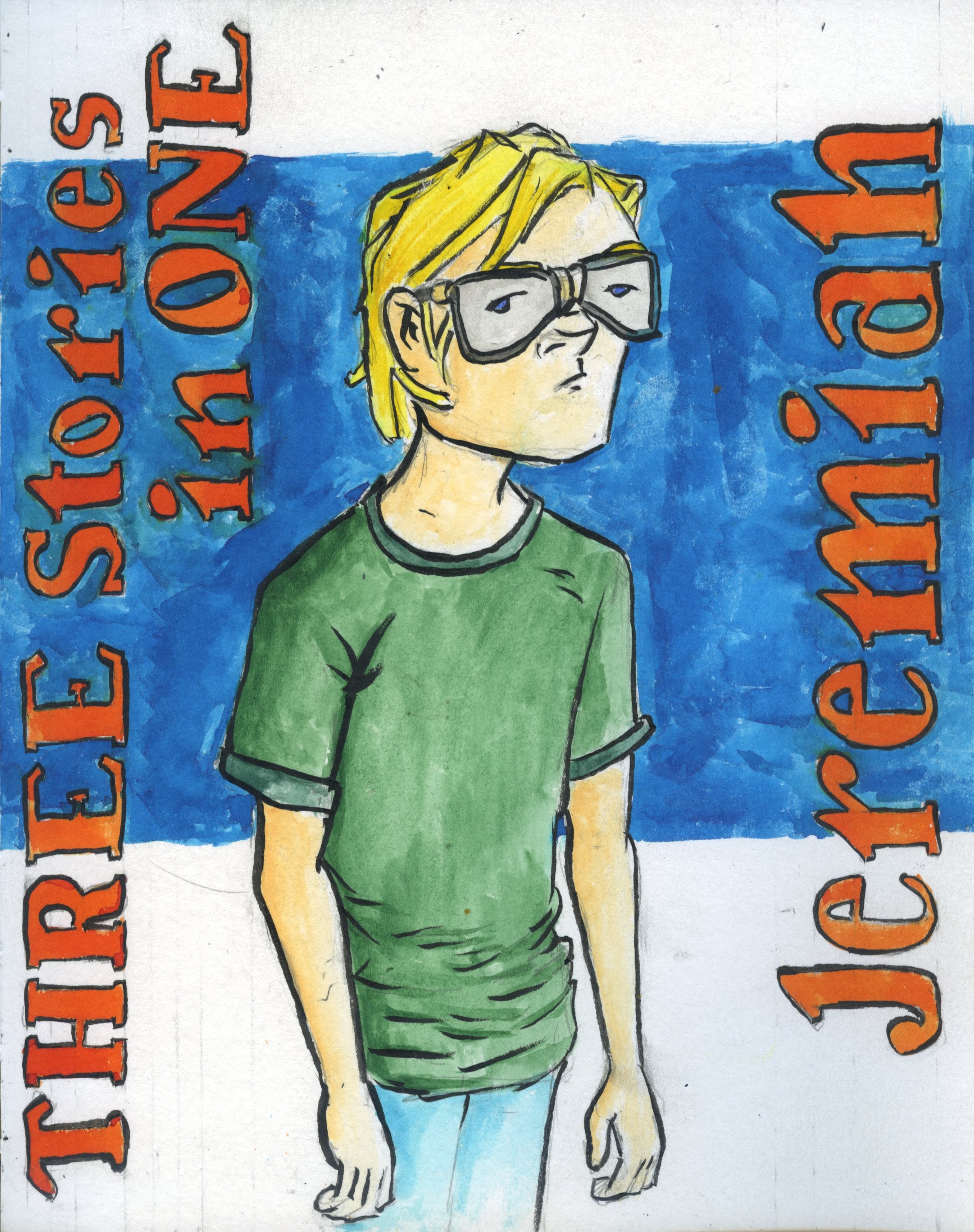
There’s something about Three Stories in One. Of all of my intellectual properties, of all my ideas, it has to be the dumbest. It wasn’t just my idea, though. Severian (nee Boone) was there with me in drama class, and when Ms. Lindberg told us to take out seats, we discussed how hard that would be for me, who came to school on my bike, or Boone, who took the bus, and it took off from there. Suddenly, Severian is (kind of) hooking up with Amber, the most popular girl in school, and I was racing cars in the Indy 500.

When I sat at my desk after school that day and wrote it all down, along with some of my own embellishments (there was lots of flying), I inserted Severian’s friend (who I barely liked), Luke, inspired by a Doors song I had just learned, and later in the tale, Wendy, who I’d had a crush on at the time. The storytelling was unique, in that, instead of chapter or scene breaks, each main character’s adventures were presented as a separate story, woven together with titles and “To be continueds.” Severian wrote a sequel to the collection, and we took turns writing them.

Three Stories in One became a mini-phenomenon. This was in the early nineties, so there was no internet to share it on, but it spread anyway. Severian typed it up, printed out a few copies, and they circulated, even coming into the hands of Amber herself (who I’m pretty sure was horrified, though the only hooking up Boone and Amber did was to play games like Ping-Pong). Severian and I were celebrities. In 1995, I condensed my contributions to Three Stories in One into a single collection (which can be read here: https://drive.google.com/file/d/1OciHzg8YdB8wyjGZNZx509v1nCvXPMIO/view) When each story fragment is put on a separate page, it came out to seventy-eight pages. In 1998, I started to teach myself how to draw, and by 2005, with four comics under my belt, I decided to illustrate Three Stories in One. I wasn’t great with faces at the time, all five of us had a distinctive look that was easy to cartoon. I made it fifty-six pages before I started making friends in the town I had just moved to and abandoned the project. However, those illustrations stuck with me, and every once in a while, I like to come back to them.

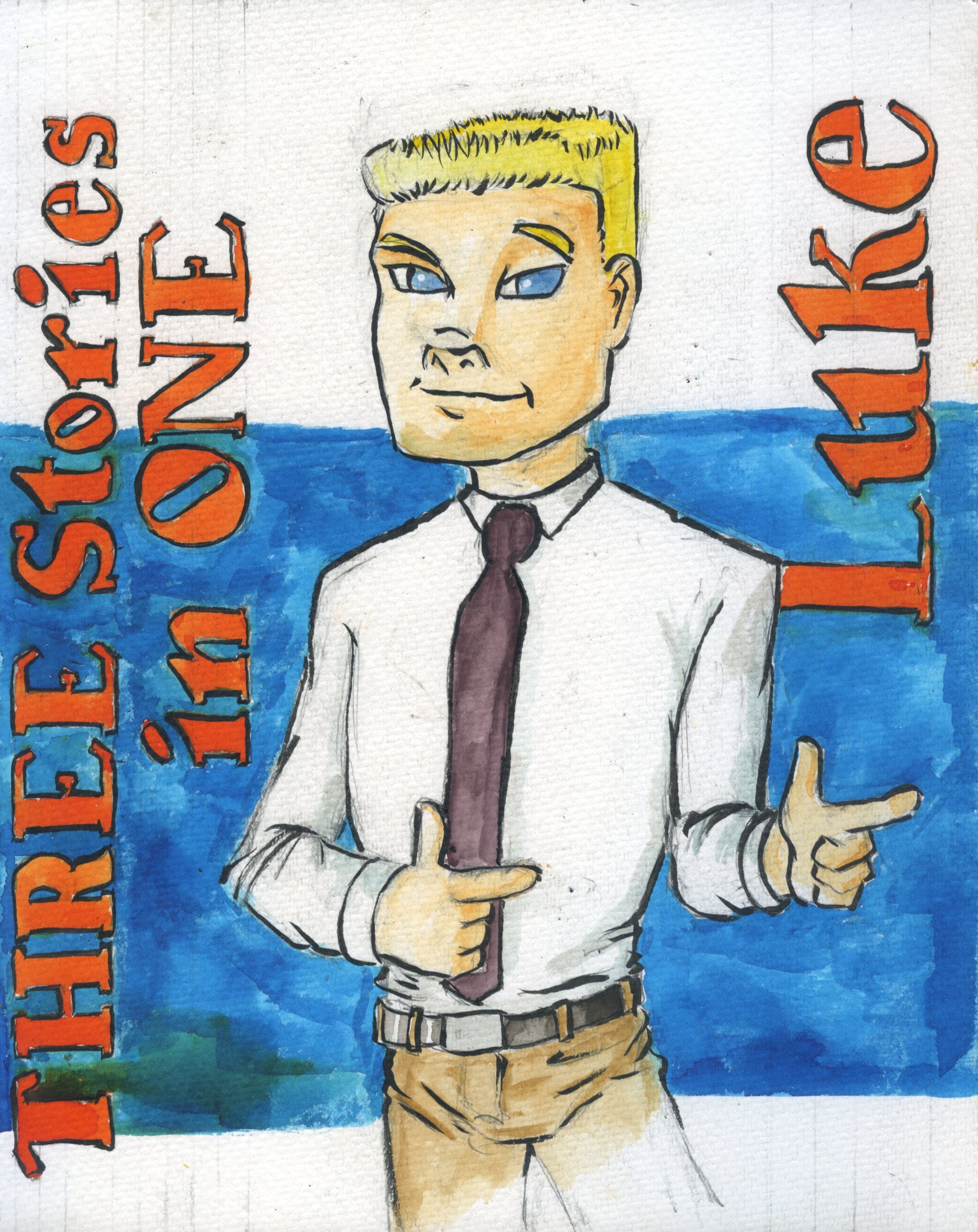
When we were kids, we talked about Three Stories in One like a pop-culture mega-hit, and I still do, even though I’m only Facebook friends with Wendy and Amber, and we don’t ever interact. The less said about Luke, the better. As for Severian, the last time I saw her was January 1, 2000, and she was presenting as Boone. She and I had a difficult relationship, as we were both mentally ill and not receiving necessary care, and she had a number of issues on top of that. After Newcastle passed away, I sat down and worked on a watercolor to take my mind off of everything. As is the case with most of my sketchbooks, I let the picture tell me what it wanted to be, and it became a dramatic drawing of Wendy. Next thing you know, I made movie posters of all the main characters.

LUKE: A total sleazebag

JEREMIAH: A miserable nerd who rides his bike everywhere

BOONE: A surprisingly cheerful and innocent goth

AMBER: The most popular and perky girl at school

WENDY: The Worst Driver in the World

I’ve made attempts to reach out to Severian, but no luck. I don’t want to do all seventy-eight pages again, but I’d love to do something smaller with these characters, and I’d love for her to writer. Though, if she chose not to, I’d completely understand. It was a difficult time in her life, and one of the main characters uses her dead name. For me, though, it was an innocent time (even though I was unhappy for at least half of it), and I’ve never written anything as bananas since.

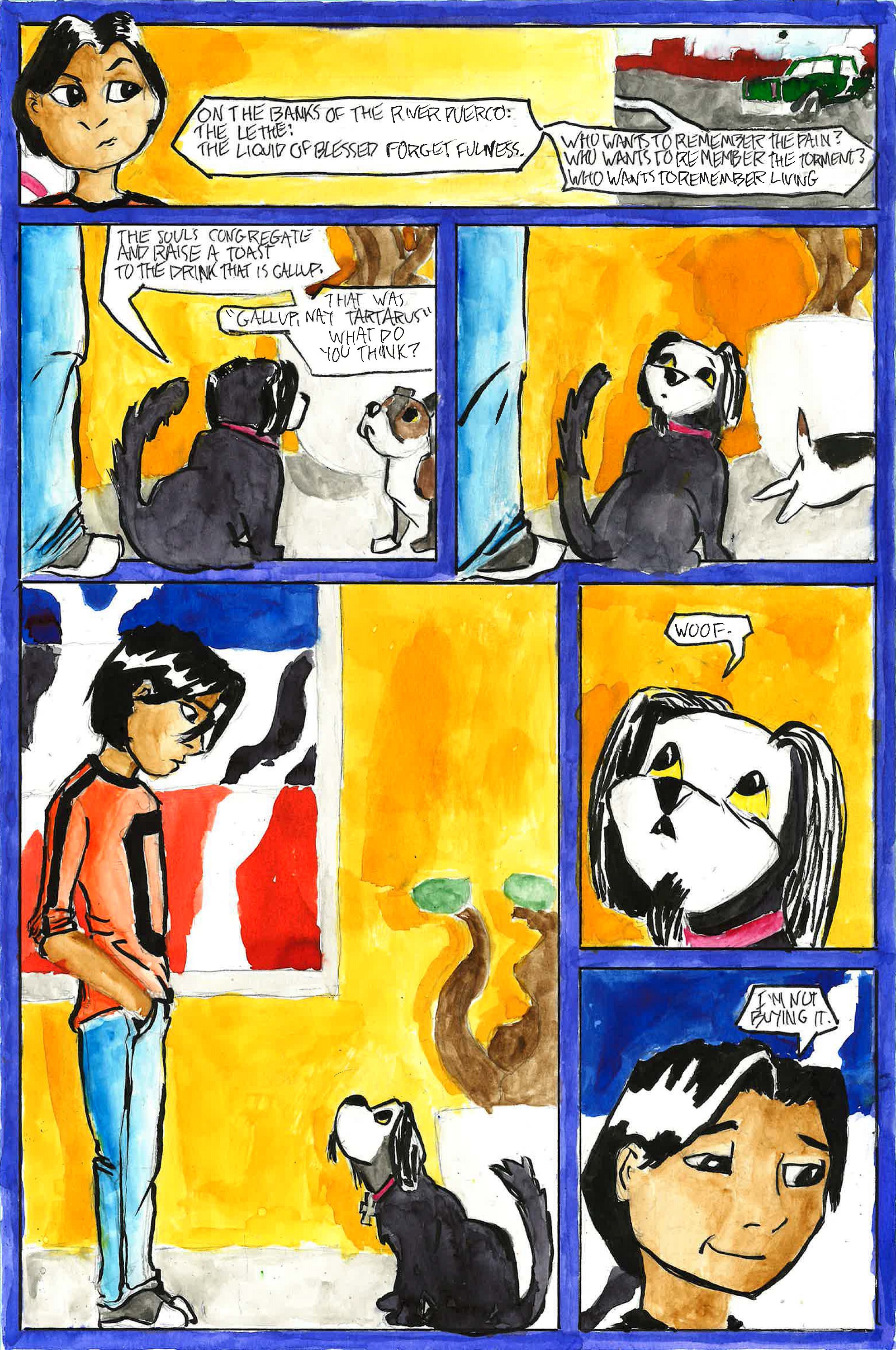
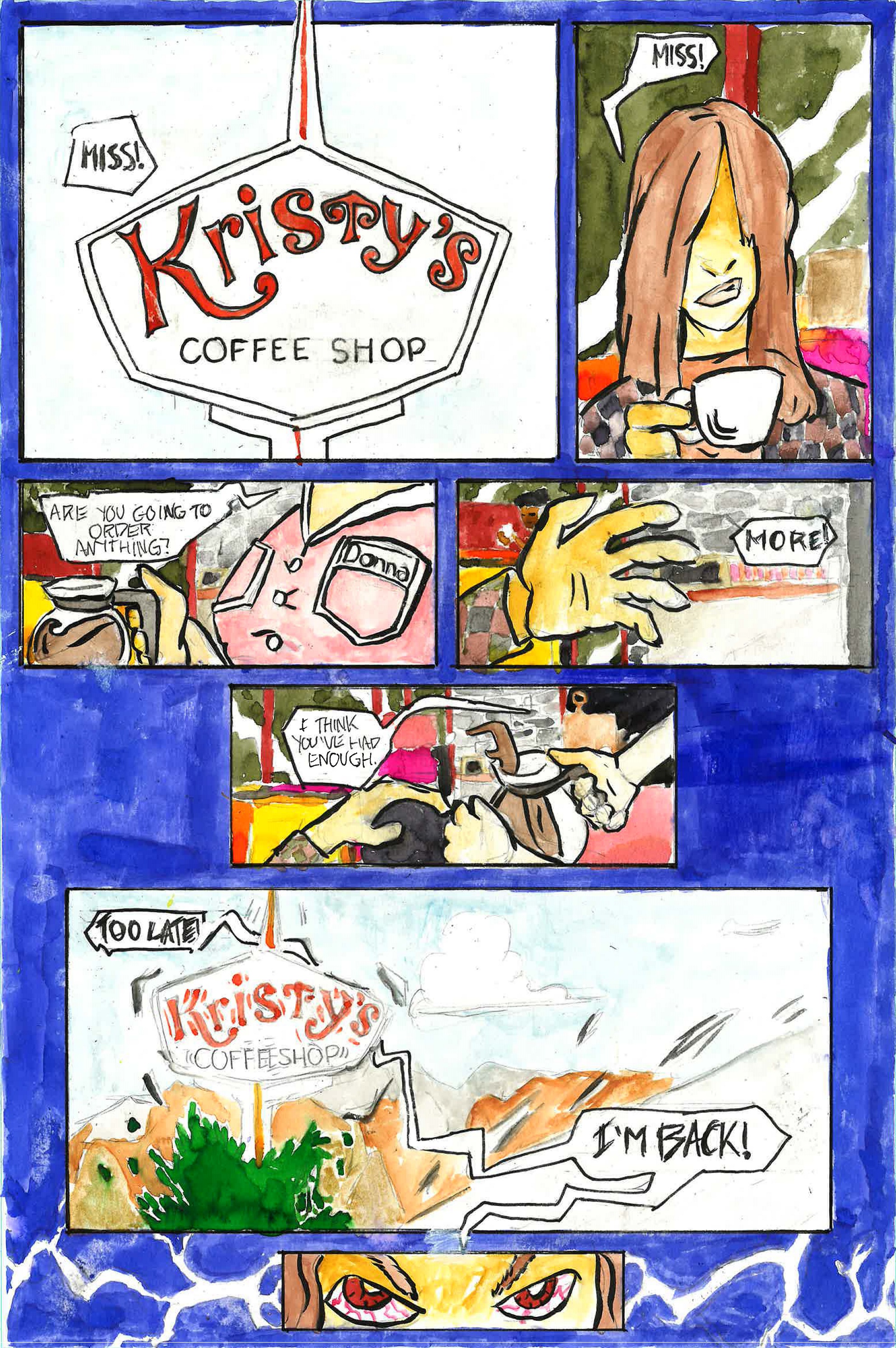
Pages 1-3

Here are the first three pages of MortalMan. Page 1:

Page 2 is a redo of a page from the original MortalMan in 2003, but it’s one of best pages from my history, and now it’s in color.

Page 3 is me drawing from memory the high-school-hangout diner from my youth (I used a reference from the sign–I’m not that good).

More when I have more!