Guerilla Art Fair

Something happened to me today that has happened to me an alarming amount of times in my life. It’s difficult to explain.

But first, the context: thanks to the vacation calculator on my HR platform, I discovered that I had to use up sixty hours of vacation before the end of the year or risk losing it forever. I don’t really want to go anywhere right now, and I don’t have that much money. I do however, have some intimate friends I love to see, so I came out to Colorado to see one. Another reason I decided to come here was my sister is here, and I have presents.

For breakfast my first day, I sat down in a greasy spoon diner, the kind you have to go out west to find. The waitress called me honey when she took my order. She engaged in a loud and animated conversation with a fellow waitress about menopause. Later, the second waitress yelled into the kitchen, “Hey, Pablo! You know Men at Work? The band! Liz and I are going to see them next weekend. The band!”

I ordered chicken fried steak with two eggs over-easy, wheat toast, and hash browns. It was delicious.

Emilie and I hung out on the couch my first day, until we moved to a coffee shop called Corvus. She informed me that Corvus offered a class in pour-over coffee for sixty dollars. While I formulated an opinion on that, my mouth delivered a standard disclaimer, “Look, I don’t want to judge …” I paused because my brain hadn’t caught up yet. Emily’s latte evacuated her face through her nose, and she laughed hysterically.

This is a very relaxed vacation. This is why I came here as opposed to New York.

Today, after a walk in one of Denver’s many beautiful parks, Emilie found me an art supply store. Because it opened at noon, we stopped at the best coffee bar in Colorado, apparently, and were greeted by the world’s most eager barista. When he finished my smoothie, he turned and asked me, quivering with joy, if I wanted whipped cream on my berry smoothie. I considered it and decided no. He accepted my choice with a shrug and a grin. Our drinks were made with two pumps of sincerity, and you could really taste it.

After another stop in a park, it was noon, and we drove out to the shopping center where a large, flat building, covered in colors, waited. And this when I entered familiar territory. For some reason, I don’t know why, I tend to wander into art galleries when I’m not expecting it. There are worse Eldritch horrors than “Suddenly: art!”; but you can’t deny it’s weird.

There were five galleries, with names like “Edge” and “Core,” and they each had their own approach to art. One gallery was full of parasols. Another had tiny little pieces, another had vast, geometric canvases. There were sculptures, collages, paintings, jewelry. One place had merch, including stickers, but they were all of babies wearing dark costumes, so I passed.

I started conversations with two attendants, which is not like me at all. All of the galleries are different, but most of them were co-ops. That meant all of the attendants were artists, and they had a lot of insight in the process. One of the attendants even encouraged us to play with his sculpture.

There was another gallery/tattoo artist in the complex, but they were closed. There was also a store, called “POP Culture,” that I investigated, only to find it was a Funko Pop store. Wall-to-wall Funko Pops. I fled. Funko Pops are an invasive species, and they appear where they are not invited.

Maybe one day I’ll understand how art just kind of sneaks up on me, but until then, I might as well see what it has to say.

It’s Time to Play the Music

When I was a teenager, I was into community theater. Don’t come for me. It was fun, it was goofy, and I met a lot of very effusive people. I tried to act, but I could not project, as I learned from the Gallup Independent’s review, in which the reviewer couldn’t understand me. I reacted to that in a rational, logical, well-thought-out way: I quit acting forever.

I still wanted to hang out, so I worked behind the scenes, building things, getting props ready, rearranging the scenery. I met some great people, including the woman who introduced me to Terry Pratchett and knitted me a Doctor Who scarf. There was the woman who used the bag my dinner was in as an ashtray. She later became one of my favorite English teachers.

As I grew older and more cynical, I got real judgy. Community theater was for people who couldn’t make it in a real theater (though you’d be hard pressed to find a real theater in Western New Mexico). They’re a bunch of hilarious narcissists. They have no idea how dumb they look. I could pick community theater people out of a crowd. They are so much more expressive and shameless and sincere and silly and genuinely fun than us latte-sipping serious people.

Even as I grew to value sincerity, I still continued to mock, out of affection now, the same way I make fun of writers, people who love The Matrix, people named Jeremiah, and so on.

I don’t have a lot of time for people with my busy schedule of writing and drawing at all hours, but I realized I was ready to make time. I’m not an unpleasant person, but I’m also afflicted with the kind of shy I haven’t experienced since high school. I’m also middle-aged, and adult men have a really hard time making new friends as they get older.

My therapist recommended the St. Mark’s players. I remembered what it was like as a teenager, so I sent them an email. They told me that they were opening a show that weekend, but I could volunteer to be an usher until they started looking for people for their next show.

They didn’t need ushers. At all. I’ll explain in a minute.

When I arrived, the door was locked. People started showing up, unable to get inside. They were all laughing and joking and not letting it get them down, and not one of them saw me. I was completely invisible.

The door opened, and the staff showed up to tell me what to do. The man taking tickets was a tiny, older bald man with a beard trimmed by a straight razor. He was charming, and he wore a three-piece suit. The lady was also charming. She fussed like a Jewish mother, and she showed me how to use the credit card machine, which is so intuitive, Oscar could use it. There were no programs, only the world’s largest QR code.

I didn’t need to be there. The venue seats thirty, and it’s free seating. The chairs are right next to the door, which is wide open when the house is, so basically, all I did was stand around and chat with the lady and gentleman. (I didn’t get their name because I have Attention-Deficit Hyperactivity Disorder.) There was also Fiona, the house manager. She was interesting, startlingly pretty, and she was invisible if you looked at her from the side.

I discovered that it was the cast who had ignored me. The crew, while not particularly interested in a volunteer usher (who can blame them?), were friendly. I met the stage-manager while he was filling liquor bottles with iced tea. (Some people think this is how John Belushi survived chugging a quart of whisky in Animal House. On the other hand, it is John Belushi.) I haggled the price of the last Snickers bar with the light guy, and I was barely registered by the intense producer who was probably an extra in The Sopranos.

How was the play? It was called The Birthday Party. There was no author named on the marquee. It’s a two-act play, with the first act taking up three-quarters of the two-hour runtime. Up front, I’m going to tell you that the acting was amazing. The set and the scenery were perfect. The blocking was engaging, and in only one scene did I feel it was lacking. The director put together a really great production.

And I did not understand a thing that happened on that stage. There were six characters, and most of them spoke with English accents. One of the characters was Irish, but he spoke in an American accent. One of the characters was an asshole, but he was also having a depressive episode, so I wanted to punch him and give him a hug (like I said, the acting was amazing). At one point, the Irish-American and the Posh English guys in suits one took turns shouting nonsense directly into the ear of the depressed asshole.

(My favorite character was the wife. The performer was an attractive woman, but she played her part like Monty Python in drag.)

All in all, it was a good experience. I don’t get out of my comfort zone a lot, but I am gratified every time I do.

Ex-Con

I went to the Baltimore Comic Con this weekend. I had to stop going to cons for a few years because money was tight, but I really need to leave my apartment, so I took the MARC train into Baltimore. I left after two hours, basically spending more time commuting than wandering the floor. And the fact that I got swindled for $100 as I was exiting the building didn’t improve my mood any.

Right before this, on my way out the door, as I was starting to feel overwhelmed, I noticed there were only about ten people in line to see Ben Edlund. A fellow comic artist once called him “the god who walks among us.” He wrote and illustrated indie comic The Tick, which was adapted into a popular cartoon, and then a live-action show which lasted six episodes, and then another live-action show which ran for two seasons. He was the head scriptwriter for Supernatural and Angel for a time, and he wrote an episode of Firefly. These are the ones I know of.

However, as I was standing in line, awkwardly carrying all the books and stickers and prints independent creators had been throwing at me, this guy two people ahead keeps looking at me, like, really intently. His expression is that of a person who mixed up salt and sugar with his breakfast cereal. He’s in a generic Jedi costume, and he seems to believe he is Jedi, in the way he comes up to me and starts speaking quietly, like he didn’t want to escalate this. Condescendingly, he tells me I was in the wrong line. The real line stretched over the horizon. No Ben Edlund for me.  

The whole experience was like walking on a swimming pool full of Lego, and then I met the swindlers. I decided that this was my last con. It was a bust, as far as I was concerned.

That is until I started thinking about it. Everywhere there were artists and writers I admired. Sometimes the only thing they were selling were original pages for hundreds of dollars, or I couldn’t think of anything to say, so I hovered away. People were wearing cool costumes, though I lost interest in taking pictures after a few minutes. Vendors were vending, which is where I found several issues of The Incredible Hulk that I’d been looking for for a while.And Artist’s Alley, always my favorite part, was vast and full of interesting people.

I did talk to some artists. I met Amanda Conner for the fourth time. I called her a filthy degenerate, and she agreed wholeheartedly. Her art is raunchy, but at the same time really sexy, with a cartoony aftertaste.

Her husband, Jimmy Palmiotti, is a writer and inker of exceptional talent, and he sat next to her. They’ve been married forever. The thing about comic artists and writers is that you don’t often see photos of them, so you have no idea what they look like. In the case of Jimmy Palmiotti, he looks exactly like you’d expect a person named Jimmy Palmiotti to look like.

Speaking of not knowing what an artist looks like, I also found Amy Reeder. Amy has got a real fairy-tale style about her, which she showed off in Madame Xanadu, which is about a powerful fortune-teller whose origins were in Camelot. I’ve gotten her autograph two times before this, and I can never remember what she looks like. There’s always the same woman in there with her, and I can’t recall who was who. I spoke to the empty space between them when I talked about how “Amethyst is the perfect book for your style,” and the one who uncapped her pen was Amy.

Likewise, I stood in line to meet Terry Moore. Terry Moore writes character-driven comic book epics in black and white. He pencils and inks his own work, and he hand-letters it. I wanted to talk to him about lettering, so I waited. I was beyond irritated that I’d been standing there for five minutes while this older woman chewed his ear off, especially about how superstar artist Frank Cho was never in his booth. And it wasn’t until Terry Moore said something to her that I realized that this was not Terry Moore, but rather his assistant. Terry was at a panel. I didn’t stick around because I was planning on leaving soon anyway, a path to the door that would take me by Ben Edlund’s booth. And you know how that went.

I had a great time in Artist’s Alley. Lately my obsession is with stickers—I’ve been decorating my sketchbooks like I’m a thirteen-year-old. This led me to a lot of tables to have brief chats with independent creators. My policy is this: if you call me over to your booth and tell me all about your comic or your book or even just your characters, I will buy what you’re, even though I hardly ever read. It’s what I’d want if I was on the other side of the table.

I think I will try this again, maybe next year at Awesome Con, DC’s comic book convention. It wasn’t worth the trip to Maryland, but the DC convention center is only a couple of stops  from me. Maybe I’ll feel less awkward around the talents I admire. Maybe I’ll meet all sorts of young, creative people who are really putting themselves out there. And maybe next time I’ll bring a tote bag.

I also got these.

Crock Plot

I turned on a movie while I was working, as I always do. It took a few minutes to realize this was a Lifetime movie. The thing about Lifetime movies is that they’re engaging, but they’re really goofy. My favorite part about Lifetime movies is describing them.

This one is about a woman who wakes up in a strange bed with no memory of the night before, and the other person is dead. He is Elon Musk, only he doesn’t look like he ate a statue of John Barrowman made of butter.

Her best friend is a lawyer, who is going to represent her, and her other friend is a good-looking guy who looks exactly like the dead billionaire. I’d say this was by design, but every male in this movie looks like the dead billionaire, including the grizzled cop who’s tracking her down.

She stays with her male friend, but they get attacked by people in hoodies. The cop figures out she’s their suspect, but when she calls the station from a burner phone, he believes she’s innocent. Later, the good-looking friend takes an axe to the face.

Spoiler alert! The lawyer and the dead billionaire’s ex-wife framed the main character. The lawyer because the main character once slept with the lawyer’s ex-boyfriend, the recently axed friend. The ex-wife did it because the main character slept with the billionaire. The cop shows up, there is a scuffle, and everybody believes the main character, even though all the (fake) evidence points at her.

Lifetime!

Noir Favorite Things

A while ago, I started listening to podcasts, and I soon learned that some really talented people were doing old-timey radio shows. I quickly zeroed in on writer and voice actor, Gregg Taylor and his baby, Decoder Ring Theatre, home of the superhero adventures of Toronto’s Greatest Champion, the Red Panda and my favorite, Black Jack Justice. Set in the fifties, the show is about a Private Detective and coffee snob, Jack Justice, and his partner, Trixie Dixon, two-fisted Girl Detective.

Taylor is an enormously talented writer. The styles of Red Panda Adventures and Black Jack Justice, as well as the anthology plays he does are wildly different. The tone between episodes of a single show will veer out of control. Black Jack Justice has had episodes that leave me laughing aloud on the train or episodes that break my heart with the injustice of it all. His dialogue is spot on, and I wish I could pull out a few quotes to share.

I picked up a couple of his novels when I was a reader, and his conversational style in the shows translates perfectly to paper. He’s been a big inspiration to me, as a writer and as an artist, so I did this little piece a while ago.

I Want to Take his Face … Off

We all know who Nic Cage is. He’s a dangerously unhinged actor who had a pyramid constructed to house his remains. When you see him screaming, “Not the bees! Not the bees!”; it’s easy to forget that this guy won an Oscar. He is a genuinely good actor, but he owes a lot of money to the IRS, and will take any job he can get.

Nicolas Cage is weird. He named his son Kal-El. He’s plenty weird onscreen too, delivering some of the most bipolar performances in movie history. You can see the same histrionics in the role that won him an Oscar on display when he dresses as a bear and cold-cocks a woman.

In Face/Off, one of his bigger roles, Cage plays a terrorist who switches faces with the FBI agent vowing to bring him to justice. He costars with John Travolta, who plays the FBI agent who switch faces with the terrorist he vows to bring to justice. And then the doves come out.

Face/Off starts out with a little boy, no older than five, getting shot in the head. It’s a John Woo movie, so no punches are going to be pulled. The next scene ends with a plane crash and gun ballet and someone getting flattened in a wind tunnel. This is the first eighteen minutes of this film.

John Woo had a long career in Hong Kong before coming to the US. The first time I saw Hard Boiled, I couldn’t get clips from it out of my head. The grace of the dives, the flash and crack of the guns. A baby urinating on the hero to put out a fire. Hard Boiled was a bloodbath, but sentimental, like all John Woo movies.

I haven’t seen all of his movies, but I have to say that Face/Off is in his top three (that I know about). With a Hollywood budget and stars, he shot a bloody gunfight around a five-year-old boy listening to “Somewhere over the Rainbow.” He ends the movie with a brutal gunfight in a church, followed by a high-speed boat chase that ends when their stunt men are thrown onto the beach. This was a bay seemingly made of napalm because everything blew up.

Face/Off seemed like the last few episodes of a long-running show. Agent Sean Archer and Castor Troy have a long history of failing to kill each other, and it shows. There are so many stories between them, I’m surprised a comic book company never got the licensing rights to do prequels. There are so many characters who have names and are given a personality who are in maybe two scenes, from Archer’s best friend, Tito to the agents at the FBI office, to Castor’s brother Pollax, to the vaguely incestuous Demetri and Sasha, who work with Troy.

Even though Nicolas Cage danced, grinned, and got a little pedo as Castor Troy, the movie is never more entertaining as when he’s John Travolta. When Travolta is Sean Archer, he has all the charisma of a sack of mashed potatoes in a toupee, but if there’s one thing he’s good at, it’s mischief. He plays Castor Troy like a sociopathic thirteen-year-old boy.

With John Travolta as the bad guy, Nicolas Cage gets to be the good guy. Where Travolta’s performance ranges from annoyed to angry, Cage brings in some real pathos. This war is weighing on both of them, and it shows.

John Woo’s career didn’t get any better than this. He made some more movies in America, to diminishing returns, including Mission Impossible 2, as well as Windtalkers, the movie about a Navajo Code Talker where the main character is a white guy. Eventually he went back to Hong Kong and has been making the kinds of movies he wants to make.

This was my favorite movie until it got dethroned two years later. I bonded to the moral grayness—when Travolta is Troy, he becomes a father and a husband, and when Cage is Archer, he steals and lies and commits great acts of violence. I was pretty convinced I was a bad guy back then, and it was good to see that you could be bad and do good things.

I also really dug the gun ballet, as well as the mythos, and the finest, as Jason Mantzoukas calls it, “kabuki acting.” I could talk about this movie forever, like how the Troy brothers are named after the Gemini brothers, but I won’t. I’m not qualified to say if this is his magnum opus. What I will say is that this movie was the work of a mad genius, and I salute you. If there’s one word you can use to describe John Woo, it’s sincerity. I think this is how he sees the world. I think that, most of all, is what I connected with.

Life in Plastic is Fantastic

Fort Totten is a border neighborhood with Maryland, and from 1 June until 29 June, all four of the Maryland Metro stops are closed. People are getting shuttled in, but the same number of people are riding. Why do all the cars feel more crowded than usual?

We’re all exhausted. We’re all in drab colors, as if our souls had been drained. On one side are the manual laborers. On the other side are federal workers, along with non-federal office workers. There are even tourists. There’s seats, but I’d have to sit next to someone, so I stand.

For a moment, the mob of students with their backpacks and white-guy afros parts and I get a glimpse of someone I can only call Barbie. The blonde sat down, her back straight, her legs demurely crossed. Her sundress went all the way to the floor, and it appeared blinding pink, but was really white with small red flowers. She looked pleased with herself.

The train pulled into Judiciary Square, and she jumped out and cat-walked out of the station and out of my life, taking the color with her.

That felt like magic.

Words, Words, Words

If there’s one thing people know about me, it’s that I’m a writer. This goes all the way back to the fifth grade when I wrote my first short story, a Top Gun fan fiction. I showed it to my dad, and he had notes. Everyone’s a critic.

I have over thirty novels to my name, as well as countless short stories, a well-curated folder of most of my essays and blog entries, as well as a memoir and whatever the fuck “Three Stories in One” is supposed to be. Between “Three Stories in One” and my school newspaper column, writing made me a celebrity in high school. I went to college to learn to write. I moved to New York to become a writer, and while I didn’t become published, I certainly enjoyed the craft.

My marriage was great for me as a writer because she had an idea for a novel (I’d only written short stories so far), she got a lead on a contest I ultimately did pretty well in, and she bullied me into submitting my work. Ten short stories were published in various anthologies, but I got over sixty rejections on a novel I wrote by accident while she was in Namibia.

That basically stopped me from writing until seven years ago, when I entered another season of the contest and decided that I was going to write a novel. I did. And then I wrote the next one. I wrote the novels to write them, and I wasn’t going to kill my self-esteem with dozens more rejection letters. I tried again, submitting my best novel so far, but after thirty-plus rejections, I gave up.

Years later, I saw an ad for a writing service. Among the their many offerings is help (from agents and editors) with writing your query letters and synopses, copyediting for your samples, and help finding the agents and publishers your work is the best match for. I purchased all of these. They found me five agents and five publishers because I didn’t want more than ten rejections. I got nine. The tenth should be publishing me in a few months.

If there’s two things about me that people know, it’s that I’m a writer and a Doctor Who fan from way back. I grew up with Classic Who, where the effects were cheap (but very imaginative), the acting was not Method, and the serials were always one or two episodes too long. Then it got cancelled, and seven years later, there was a movie with flashy effects and motorcycle chases. When that went over like a fart in a car, they rebooted the series nine years later, and it runs to this very day.

I’ve loyally watched all of NuWho (or Who Redux) as they have gone from Doctor to Doctor and showrunner to showrunner. Prior to last year, the latter was Chris Chibnall. It did not go over well. It started going badly before his era even began because the Doctor was going to be played by an icky girl. I defended Chris Chibnall from the Doctor-Who-not-Nurse-Who/Go-Woke-go-broke contingent who were complaining about the writing so they could mask their sexism. However, I wasn’t enjoying the show anymore. When it wasn’t completely forgettable, the mythos was being torn down, and the character was being stripped of everything I loved about them. The problem was indeed the writing. As a writer, I’m not happy to say this.

When a project goes wrong, especially on TV, it’s almost always the writers. And considering how much people complain about the writing, it’s no wonder the studios want to use AIs to do it.

But movie and TV writing is not an art, it’s a science. In a movie, you must, by around page 55, have some kind of conflict. And the audience is so trained to expect this that The Avengers dragged a little in the middle because the epic fight on the Helicarrier took place on page 70. If characters don’t hit their beats like they’re supposed to, people can’t handle it. Look at the reaction to The Last Jedi. I tried writing a pilot, but I couldn’t make it fit into five acts.

Movies have endless script doctors fine-tuning every little thing. A sitcom will have rooms full of writers, fine-tuning every single joke. Producers and studios give their input. Actors love to give their input too, sometimes rewriting their lines. A producer (or a comic book editor) will have an idea, and they’ll make a writer make it happen. The writers everyone is complaining about are a committee, about as far from the process of writing I enjoy.

Don’t get me wrong—I love a good collaboration. Some of my favorite memories are sitting in Shane’s studio, bouncing ideas off of each other and creating a screenplay and a lost screenplay. But that’s not what happens. In movie and TV writing, someone is always reading over your shoulder and telling you they can do it better, unless you’re Neil Gaiman.

I used to want to be Joss Whedon (before we found out he was a violent creep) because he had made a brand for himself. He had fans who would watch anything he wrote, even Dollhouse. They picked apart his mythology, they obsessively watched for Easter eggs. I wish someone would do that to my stuff. Yeah, it would be great to have fans. I wish my other twenty-nine novels had readers.

On the other hand, I sit here in my cozy apartment with my swiftly growing cat, living my life with (mostly) peace and contentment. How miserable would I be if I were a professional writer?

If I were a novelist, I would still need a job because authors get paid shit (there’s a finite amount of money for authors, and it’s all going to JK Rowling). If I were a TV writer, I’d have to hustle just to make minimum wage while the studios figured out ways not to pay me, and I’d have to share my inspiration with a crowd and a belligerent showrunner. If I were a movie writer, the screenplay I poured my life into is going to be ripped up and reassembled, so I won’t recognize it.

The Princess Bride is a classic because of the performances and the art direction and costuming and sets, all brought together by Ron Howard, but every single quirk, every single quotable line came from William Goldman. You can’t have a movie, TV show, or comic book without the writing (though the founders of Image Comics gave it their best shot), but people don’t notice unless it’s bad.

I’m living my best life right now. I’m not famous, and maybe that’s okay. I used to feel like I was supposed to have a bestseller for my twentieth high school reunion, but I don’t want to hand over parts of my soul to people who have no respect for me. I’m a writer. I write. And that’s good enough for me.

Regenerational Divide

All my life, I’ve been trying to figure out something about the show I’ve been watching since I was a kid: if Doctor Who is the same person, incarnation after incarnation, how are they so different? Like, for example, it’s not easy to picture Jodie Whittaker as the same person as Jon Pertwee.

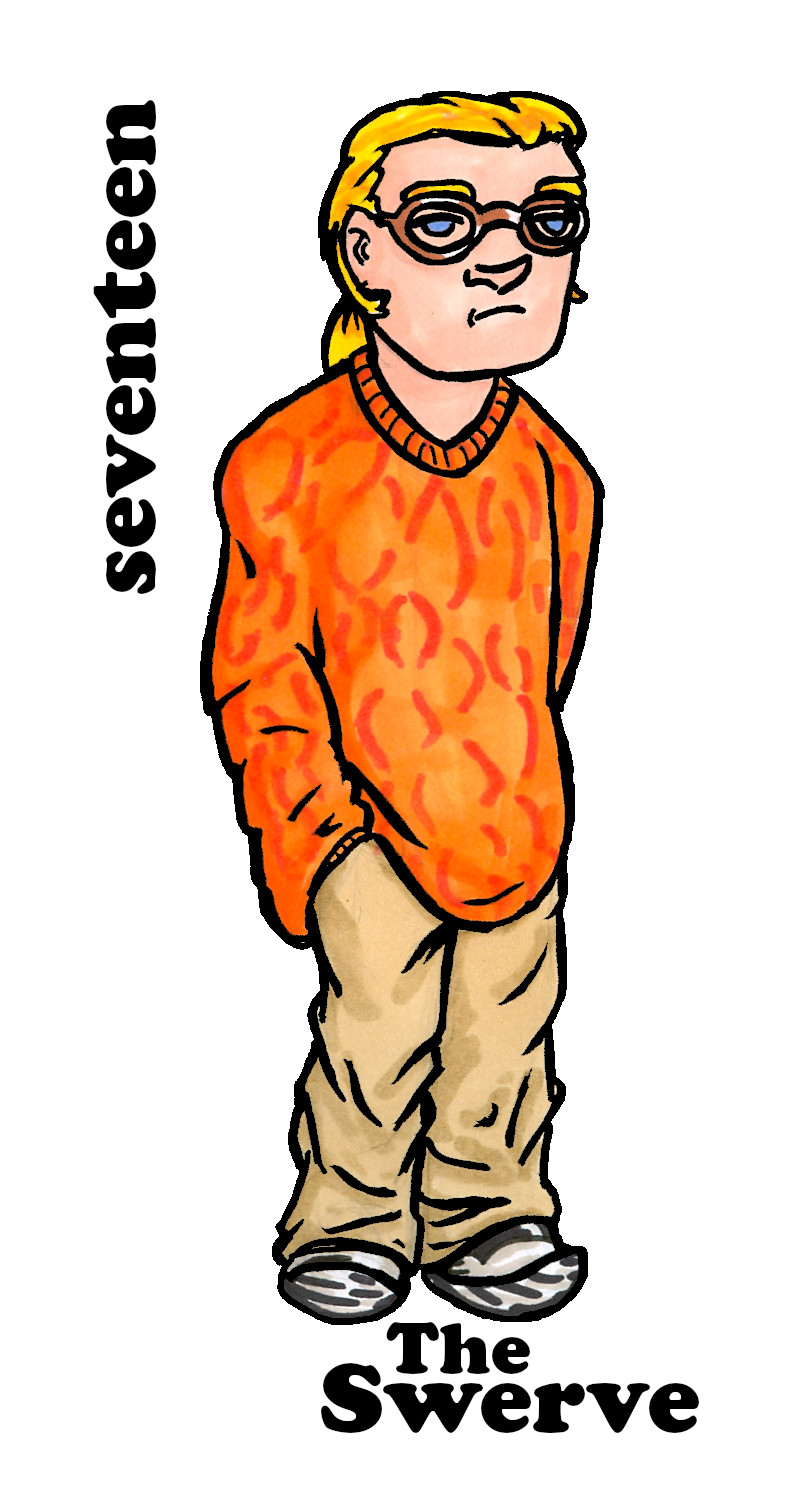
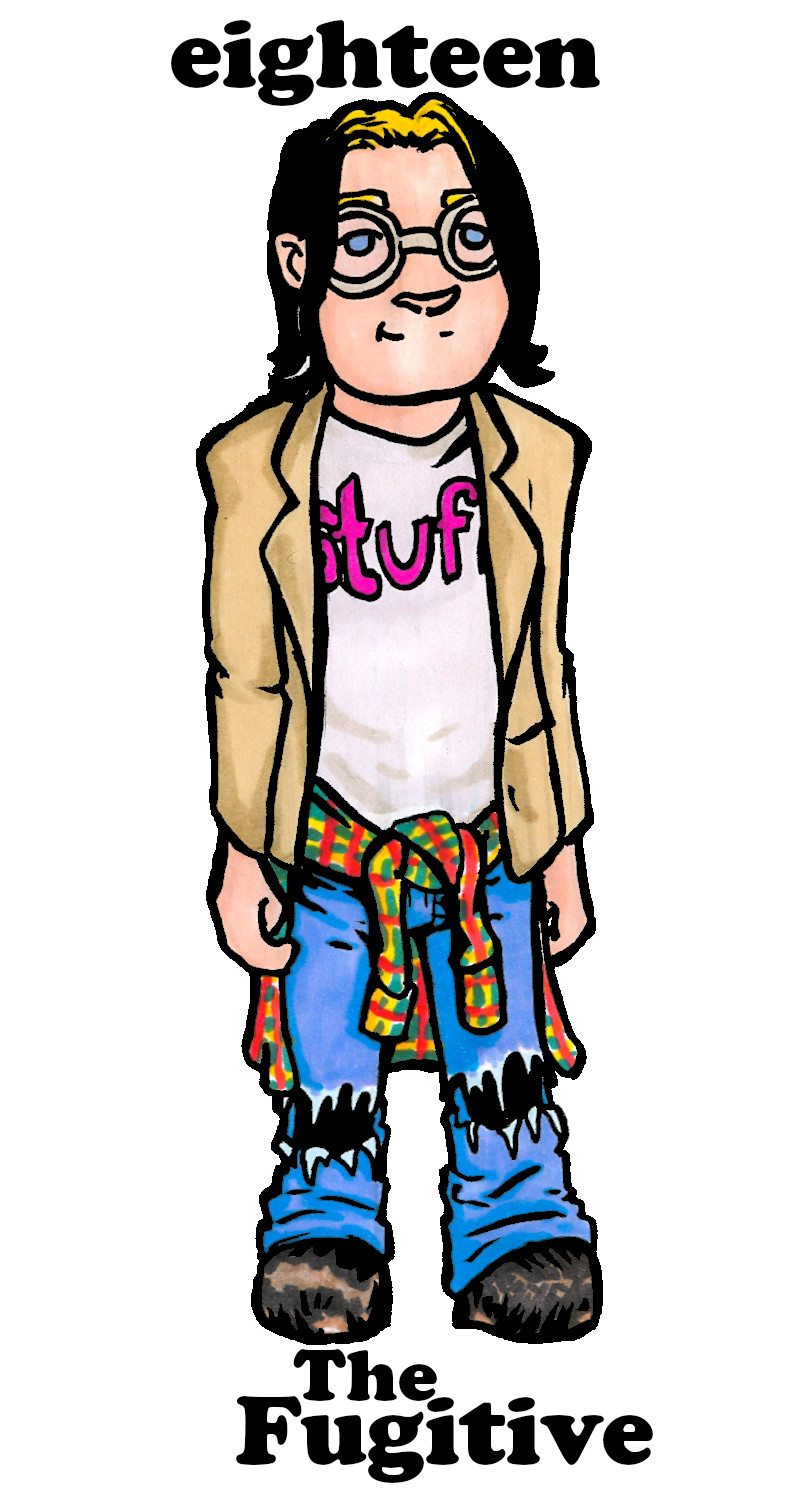
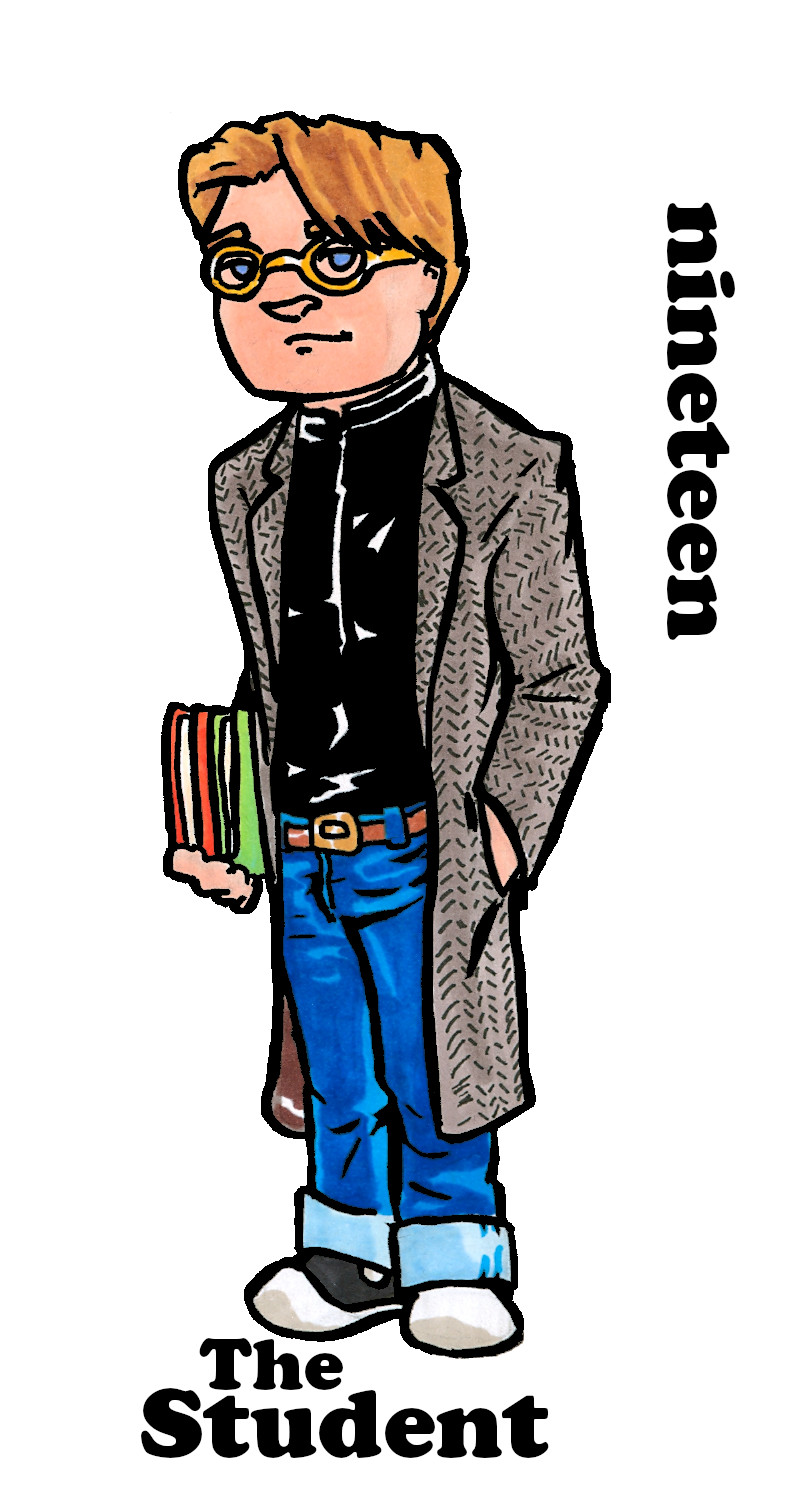
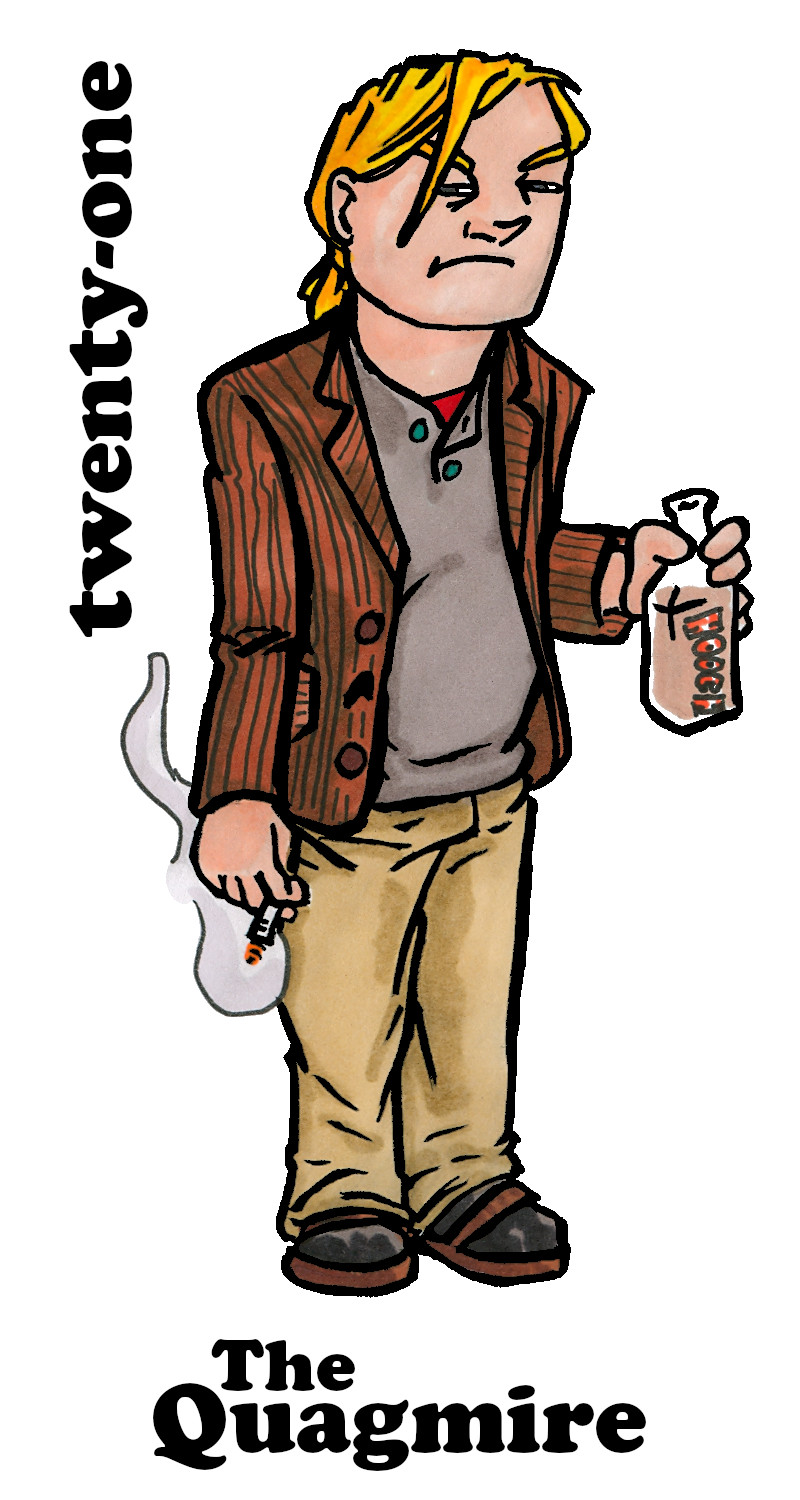
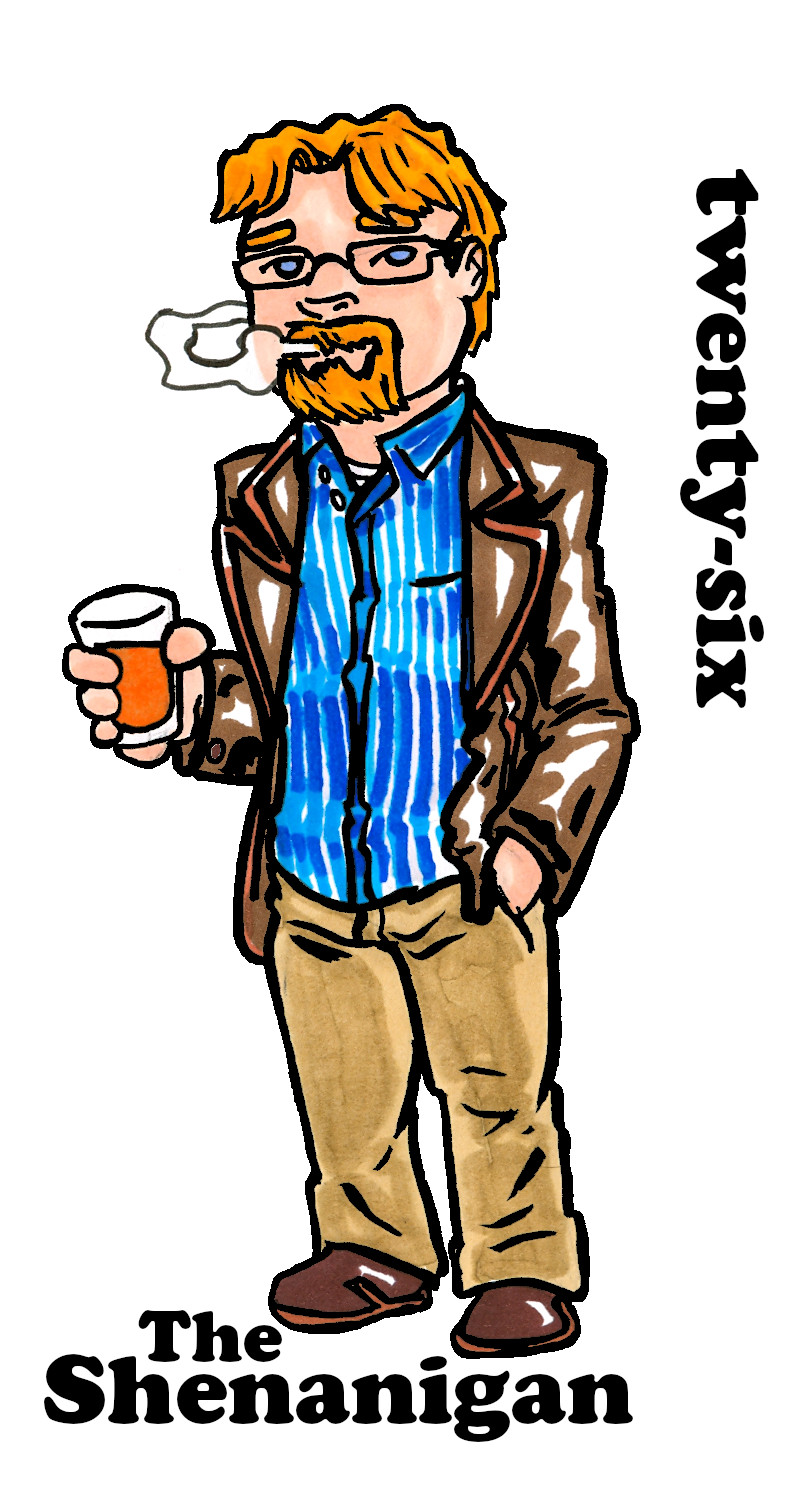
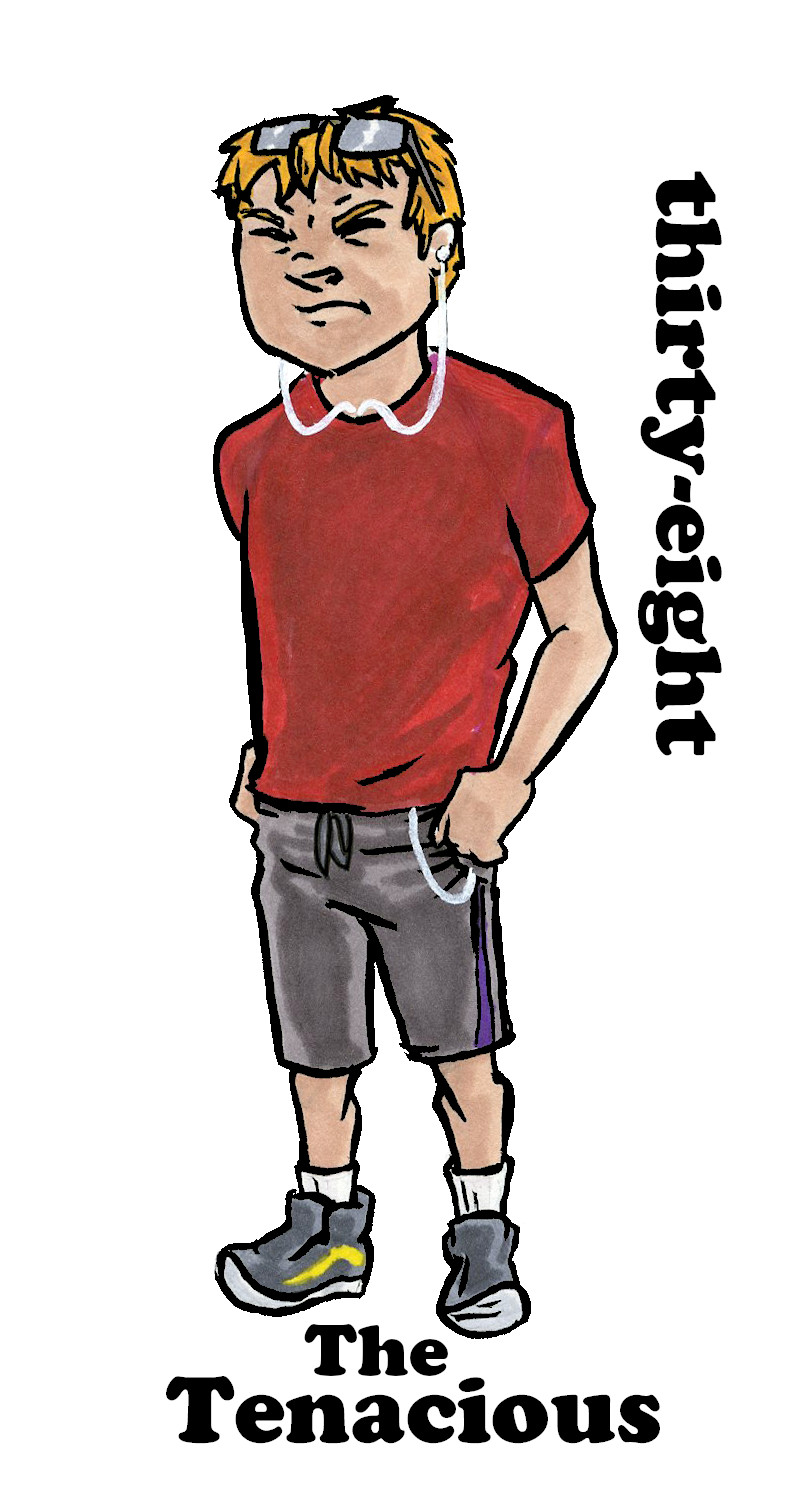
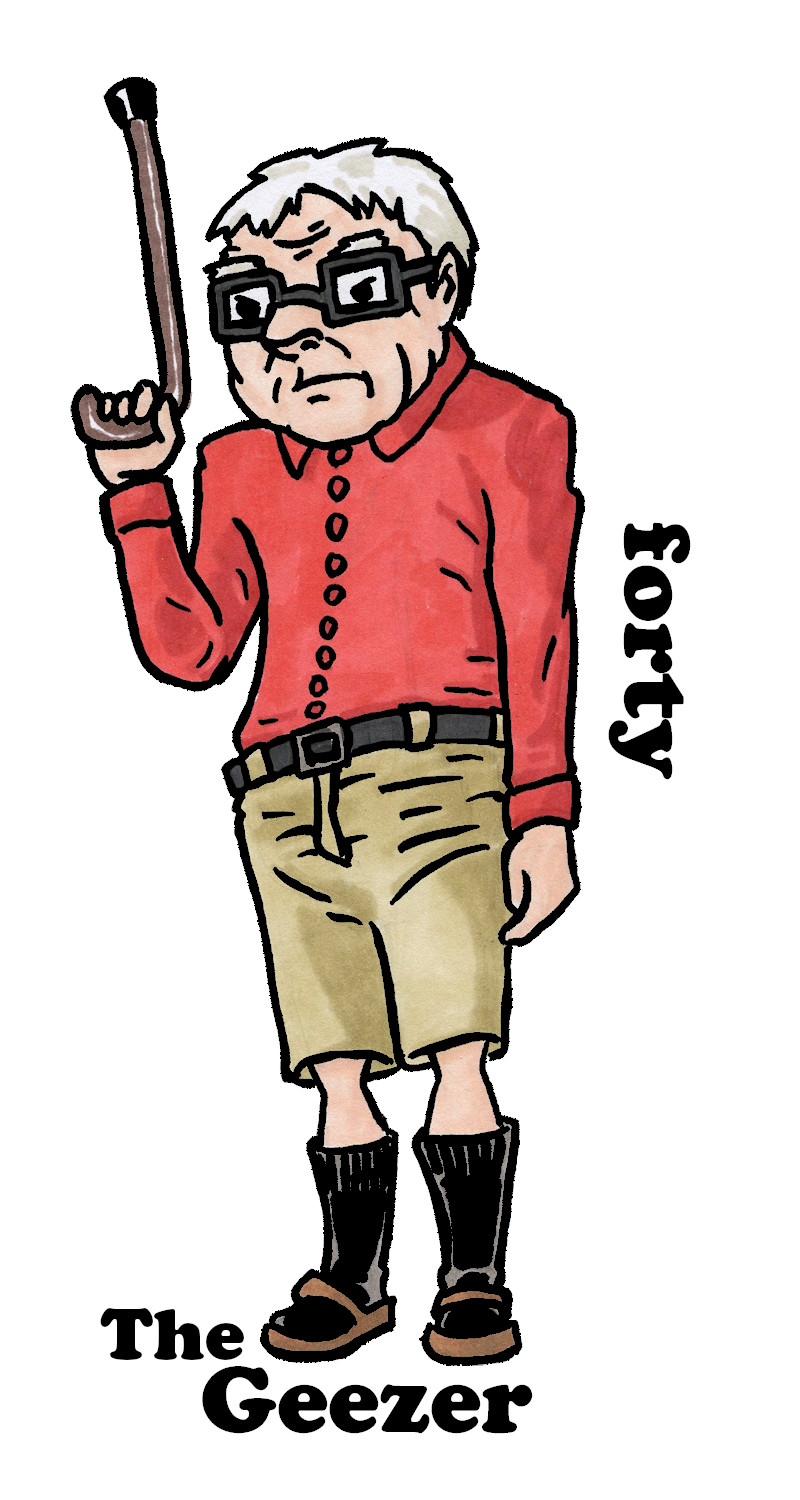
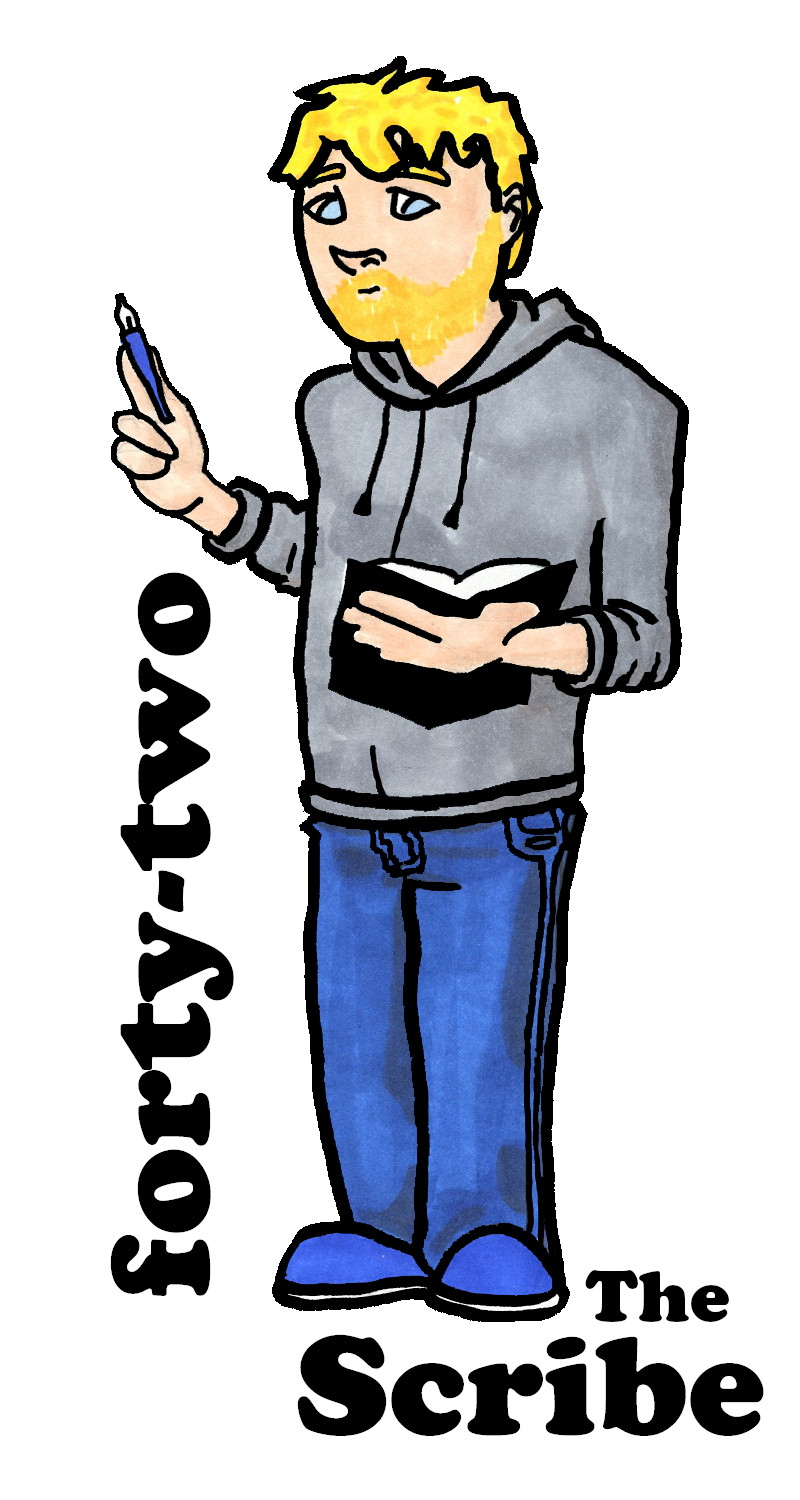
A few years prior, I had illustrated all the Doctors up to that point (including Matt Smith, even though we were still firmly in David Tennant territory), in a very cartoony style, so I took that style and reviewed my life, going back twenty-five years. Each year after that, I’ve drawn myself, including the years when I had otherwise quit drawing altogether (you can tell which years those were).

Later, I wrote a screenplay to challenge the question, in which a character based on me met up with four of his younger selves, going back to age nine, and I understood perfectly. Forty-eight-year-old me would not be able to stand a twenty-six-year-old me, and nine-year-old me was a monster. Without further ado, here are twenty-two incarnations of me.

And now, on my forty-eighth birthday, I’m taking care of a cat shortly after my last one passed away, so I guess that makes me a parent.

Enjoy your Sunday! I know I will.

He Was a Good Friend of Mine

I listen to YouTube videos while I work. It helps me focus. About half of my job is waiting for PDFs to download, so I can successfully hear whatever I have on without screwing anything up. I listen to a great many subjects, including true crime and pop culture.

My favorite from the latter is the Professor of Rock, who’s this middle-aged dude in a bowling shirt and a trilby hat, spending twenty minutes educating you on the history of just one song (although he sometimes does an album, sometimes a band). He focuses on the sixties through the nineties and grouses about music these days. If you’re lucky, he’ll tell a touching story about his dad, a rock music fanatic who introduced him to the subject.

Each show begins with the mystery, as the thumbnail and title only drop hints about the subject matter du jour. I mention this because I clicked on a video because the thumbnail said that the singer was inspired by a kid’s cartoon. The title said, “Band swept the world with the most memorable first line in rock history.” I love this show because every song, every album, every band is the greatest of all time. It’s good for the mood.

You may have guessed what today’s song was. I had no clue, even as he set up the mystery, then cut to the clip that was going to reveal the answer. The image now has this sepia tone to it that all photos from the seventies and eighties have. We now see a skinny, shirtless man with flowing, dark brown hair and ox-bow mustache, and he was screaming. Do you know what he was screaming? He was screaming the most memorable first line in rock. He was screaming, “Jeremiah was a bullfrog!”

“Joy to the World,” by Three Dog Night was the bane of my existence. It’s the first thing that comes to mind when most people hear my name. And half of them have to tell me. There were the bullies who taunted me with it, the teachers who were just bein’ goofy, and my customer service clients at every non-office job I’ve worked. So far, no one at my current job has asked me about this song, but something tells me Work Dad is waiting for the right moment.

The thing is, I love my name. My parents told me once that they were going to call me Robert, then changed their mind. Can you imagine me as a Robert? I’d be manscaping.

But I think it’s cool that I’m Jeremiah. It suits me. The problem was, it was something I had to endure as a child. I tried changing my name to Jerry (how was that any better?), but I went back to Jeremiah in high school, though occasionally I went by Jerm (to be honest, I didn’t really love it).

In college, a lovely young woman shouted at me, “Dude! You should have been named Eugene!” I agreed and adopted Eugene as a nom de guerre. Obviously, I didn’t change my name, but it became a character in a series of short and long stories, as well as a complete novel. When I was waiting tables, I changed the name on my tag to Eugene, for reasons I’m about to get into.  

I worked weekends on Fridays and Saturdays, known as the Black Friday (and Saturday) of late-night family restaurants. Until the last customer left, we were dealing with drunken monkeys on acid. We had one woman who stuffed feminine hygiene products in her ears, nose, and mouth and ran around, shouting, “I’m Tampon Lady!”

That and 85 percent of the tables had one spokesman who said, “You’re a bullfrog! You know that song?” Or, “Jeremiah was a bullfrog! You know that song?” Or. “Did you know you were a bullfrog? You know that song?” And so on. It got to the point where I just started telling them I didn’t know what they were talking about, and eventually they’d sing. That almost made it worth it. They only ever knew the first line.

Every once in a while, the Professor of Rock sits down with a member or two of the band and has a chat. The guy who wrote the song and the line that hung around my neck like an albatross met with the professor today. Prior to “Joy to the World,” Three Dog Night was making adult contemporary music, but after, they were rock superstars. The first line comes from an obscure cartoon frog who might have been an alcoholic. I don’t know if Jeremiah was the name of the frog, or if they just chose it because it has a great rhythm to it.

At the end of the episode, the Prof lists all the major artists who have done covers, as well as the most memorable TV and movie appearances. I don’t remember any of the ones from “Joy to the World,” though they left out the time Scully sang it to an injured Mulder, which I thought was a shame.

Pop-culture-wise, I don’t see or hear my name a lot. There was a short-lived TV show called Jeremiah, starring Theo from The Cosby Show. In Batman World, the founder of the insane asylum the Joker keeps escaping from is Jeremiah Arkham. He was also coo-coo for Cocoa Puffs. Other than that, you rarely hear my name despite it being unique and pretty good.

I’ve only known a small handful of people in my life named Jeremiah. Most of them go by different names (like JT, as one example). It’s so rare that, whenever I hear “Jeremiah,” they’re most likely talking to me. I got whiplash when at the Laundromat, a three-year-old kid named Jeremiah went on a rampage, and I kept hearing, “Jeremiah, stop it! Jeremiah, sit down!” Same when the couple behind me at the Panera Bread were having a loud conversation about someone named Jeremiah who was not me.

Jeremiah Murphy is a surprisingly popular name. Until it went down recently, jeremiahmurphy.com belonged to a black gospel singer, and jeremiahmurphy.net belonged to an unfunny comedian. Someone on Facebook named Jeremiah Murphy sent me a friend request, and a quick look revealed he was collecting Jeremiah Murphies. He had eight so far. In Indiana, I started getting collection calls for some douchebag named Jeremiah P. Murphy. The reason they kept calling is because, what were the odds of two people named Jeremiah Murphy in the state of Indiana? They were right. There weren’t two Jeremiah Murphies in Indiana. There were three.

I like being Jeremiah. It suits me. It’s got a great rhythm. If I had a different name, I’d use it in a piece of fiction. It would have made a great celebrity name if I had lived my life differently. It’s my name, and it’s perfect.

Just …

I am not a fucking bullfrog, okay? Jesus Christ!