Playgrounds New and Old

When Kate and I first moved to the DMV area, we lived in Alexandria. I liked Alexandria because it was a quick Metro ride to DC proper, and it was a big enough city of its own. After we returned from Doha, she made the unilateral decision to move us even farther from the District, and I had no reason to go to Alexandria anymore.

If you’re pondering Alexandria, you might think of it as the home of the best sushi in the world. You might think about the other Washington Monument erected by the Masons. You might think of how the Revolutionary War was planned in a pub there (which explains a lot). That pub, still serving ale, is in Old Town.

The spring following my return to the area in, my friends, Steve and Mere, joined me as we ducked in and out of the quaint shops that line the walk from the Metro station to the Waterfront, about a mile and a half. We explored an interlinking series of cemeteries, as well as the Torpedo Factory (more on this later)

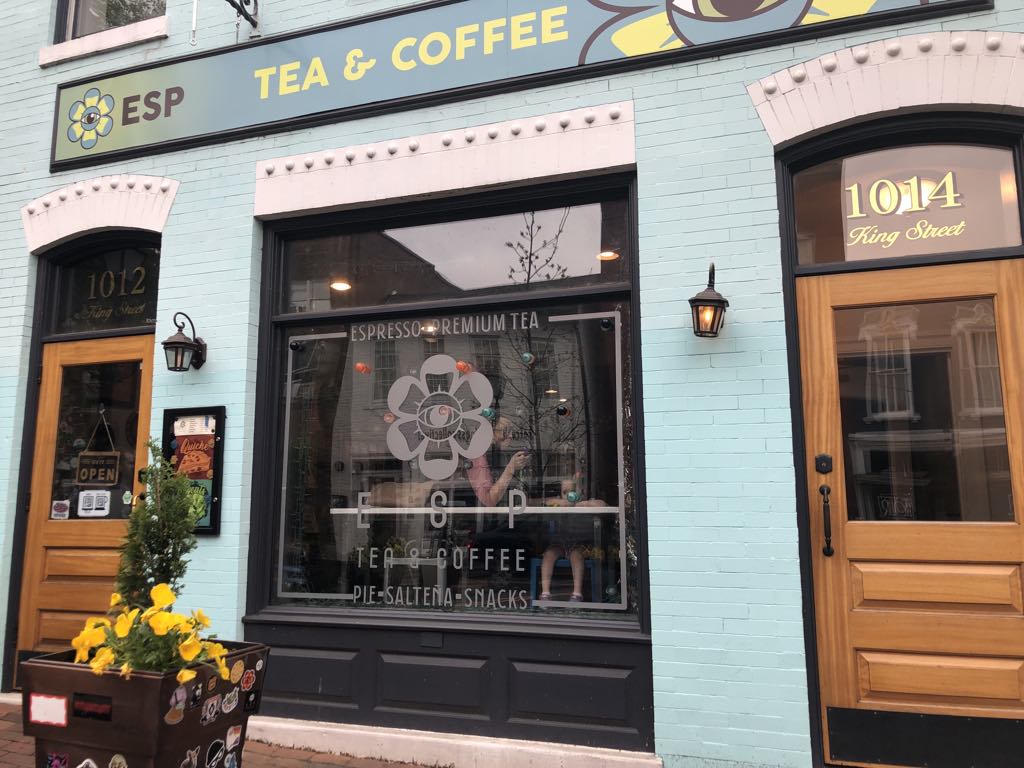
It took six years to return, this time by myself. Even though I’m working on a project this weekend, I wanted to enjoy the weather and crank out a few portraits in a spot where I’d see a lot of tourists. That place was ESP, which stands for Espresso, Snacks, and Pie. I had neither snacks, nor pie, but I did enjoy an Americano, along with a sticker. Every store and café in Old Town sold stickers.
I occupied myself with my weekend project because there was only one interesting person. There was also a deeply plunging neckline, but I only observed that through my strained periphery.

Later, with one eye on my sketchbook and one eye on foot traffic, I spied an older woman, her hair long and wild, looking as if she were going to tear that hair out. To my horror, she approached me, out of breath and panted, “I know you probably can’t help me because you’re a man, but I’m going to ask anyway.”

My mind struggled against this torrent of twitchy desperation like someone walking against a hurricane.

“Are you ready?” she demanded.

No. “Yes.”

“Do you know Call Your Momma?”

I sat there, and a number of thoughts rattled through my skull. Did she want me to call my mother? Was she talking about the bagel sandwich chain Call Your Mother? That would make the most sense. And yet. What was it about being a man that would handicap me from knowing a bagel shop’s location? It didn’t matter because I had no idea where it was. Just like a man.

It took about twelve seconds to put all of this together into one coherent thought, while she waited for my answer, quivering in impatience. “Sorry,” I replied, “I don’t live here.”

She stormed away, shouting over her shoulder, “Of course you wouldn’t know! You’re a man!”

Despite being the victim of misandry, my journey of nostalgia went on. I loved coming here when I was younger. But so much had changed. The only comic-book store in Alexandria is now a spa. The coffee-and-pastry place we liked to go to is an empty, gutted building.

One thing hadn’t changed: the Christian bookstore and the sex boutique are still there…
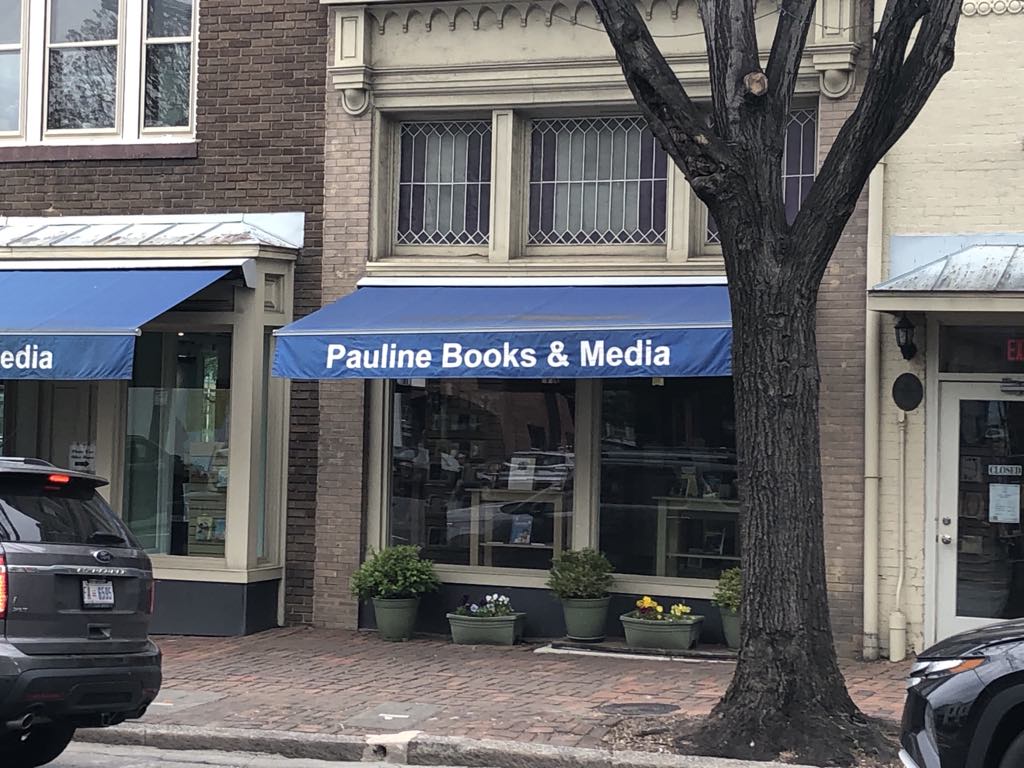
… separated by a tiny Thai restaurant.

That restaurant is a hero.

Eventually I arrived at the Waterfront. When I lived here, this was a parking lot. Now it’s families enjoying their freedom from the latest cold snap.

The reason I took the hour journey, which included two trains and a twenty-minute walk, was the Torpedo Factory. It was once a literal torpedo factory, and now it serves as studios and shopfronts for over a hundred artists.

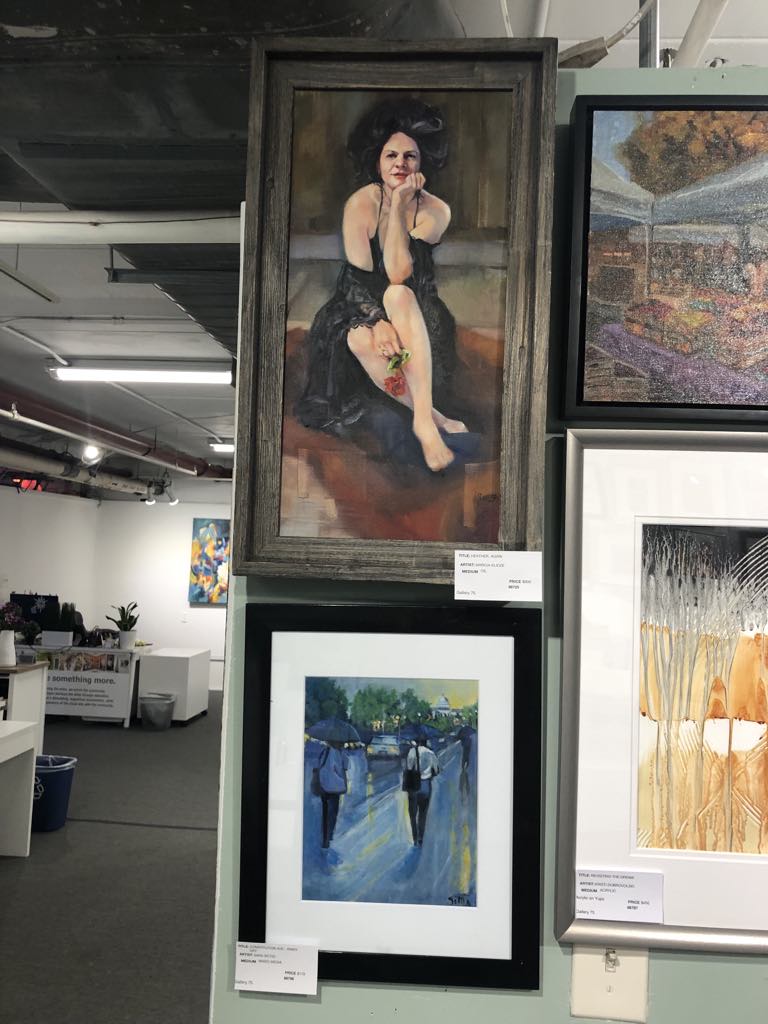
I was able to make it through the whole building in a short amount of time because most of the studios were closed. A lot of the open ones sold jewelry, which I am not interested in. A lot of the remaining was just not my style. And yet, even though my interests were whittled down to such a small percentage, I saw a lot of great art Saturday.

I have an expensive philosophy when I go to art fairs: if you talk to me about your shit, I will buy something from you. All you have to do to start such a conversation is say hi. You’d be amazed at how many artists don’t get this.

I had four good conversations, and I bought something from three of them. (The fourth was out of my price range, but he gave me a post card.) My longest conversation, however, was not with an artist. It was the hippy at the art store was very chatty.

As soon as I walked in, she asked, “How’s your last day before martial law?”

I asked her why Easter, and she laid out a pretty good case. She also pointed out it was Hitler’s birthday, which was less convincing. We talked more about a lot of stuff while she flipped through my portrait sketchbook and observed that I must be straight. She thinks asexuality is hormones. She is also an atheist, a bit more militant than I.

Ordinarily, I don’t like to talk about politics. It makes me sick to my stomach, and it doesn’t fix the world. For some reason, Candace made it easy to vent. She then assured me that Trump’s days are numbered. She says that the Republican party will impeach him in a few months, July at the latest.

She’s never wrong about these things because she can see the future. She wasn’t talking about any of this “woo-woo shit.” She had a talent for pattern-recognition. Take her word for it.

I enjoyed chatting with her, but I wanted to find a table in the Waterfront and work on some more art. I saw two more interesting people, who I planning on drawing when I’m done with my project. Enriched, I journeyed home.

When people say you can’t go home again, it’s usually with regret and heartbreaking nostalgia. I certainly felt it today. However, nobody talks about the new, exciting stuff that replaces our old loves. Time moves on, nothing’s ever the same, and that’s how life stays fresh.
Grave Matters

I woke up directionless On Saturday. I wanted to draw, but nothing was coming to me. You can imagine what a relief it was when one of the most influential people from college shared with me his very good artwork. Dude’s got an eye for color and chaos. We chatted all morning, mostly about philosophy—not like two guys in togas, but rather about the decisions and circumstances that led to where we are. I picked up a lot of insight into my friend and into myself.

I wanted a café near the Metro so I could hop the train over to Union Station and see if Ember was around. I settled on Ididos, nearish to the Metro station, and would leave when I was good and ready.

Just as I was about to eat what I knew was going to be a fantastic, Ethiopian breakfast sandwich, my phone made a noise. It was an unusual noise. It was telling me I was getting a phone call. The only people who call me are the robots at the pharmacy, so I pulled it out of my pocket with sweaty hands.

The caller ID told me it one of the most influential people from New York. Immediately my mind said, “I can’t lose another one.”

There is nothing wrong with my friend. She was checking in because she had some precious, precious time, and she thought she’d spend some of it on me. She was such an amazing friend because she was a hilarious and filthy (and really professional) degenerate, and she was also the most loyal, sincere, protective, Mama B you’ll ever meet.

Energized by my friends and the four golf caps I saw, across all demographics, I decided not to go looking for Ember. Instead, I walked south. It was miles to the next station, and I had no idea how I was getting back home, but I didn’t care.

That’s how I stumbled onto Rock Creek Cemetery. I had been there in 2011 with a friend, seeking out Clover Adams’s grave. I remember how haunting it was. While I was in the neighborhood, directionless, I thought I’d find it again.

Clover is how Marian Adams was known to everybody. In the late 1800s, she was married to famous writer named Henry Adams, and they lived in Washington D.C., near the White House. She was a prolific photographer, and, by all accounts, their marriage was a happy one. However, after her father died, Clover sank into a deep depression and drank a lethal amount of photo-developing chemicals.

When I first heard this story, I was reminded how my then-father-in-law coped with his wife’s death. He purged every photograph with her in it, every tchotchke she collected. He even remodeled the family into something completely unrecognizable. Likewise, Henry burned her letters and photographs. Neither Henry nor my former father-in-law ever spoke of their first wives again.

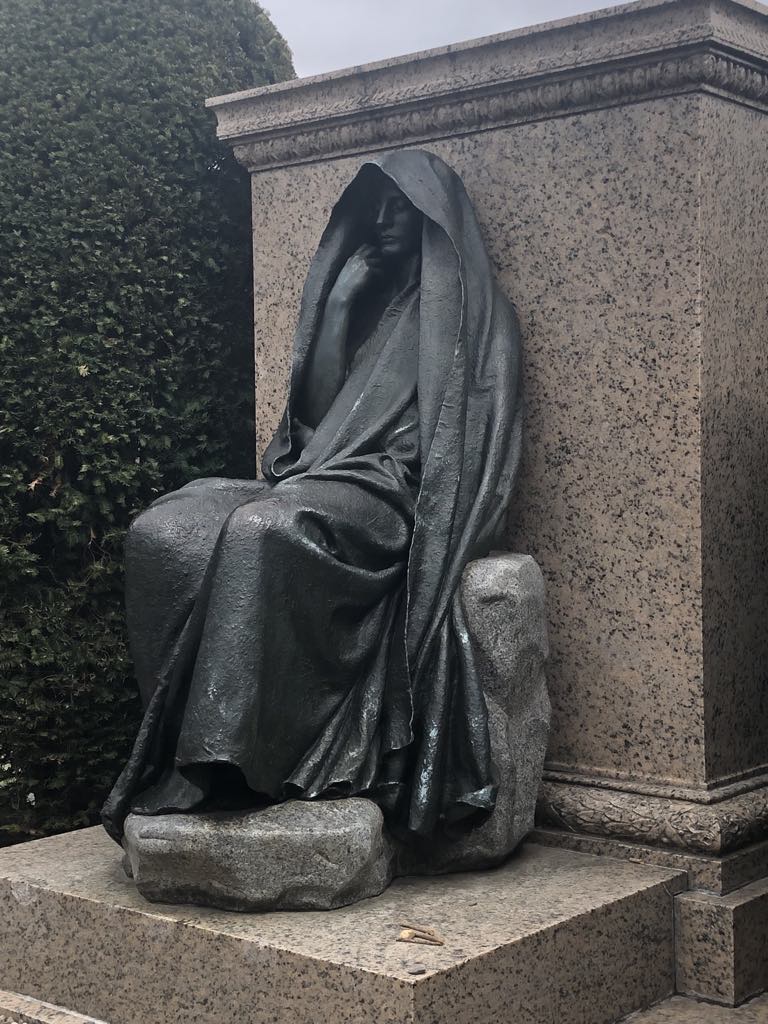
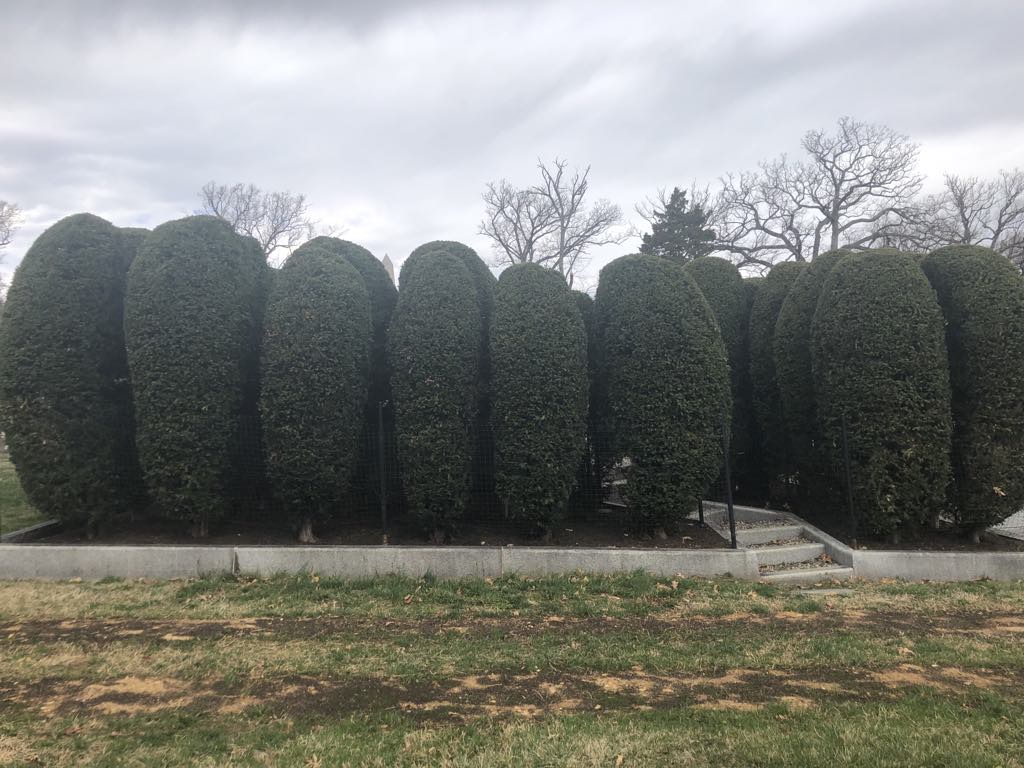
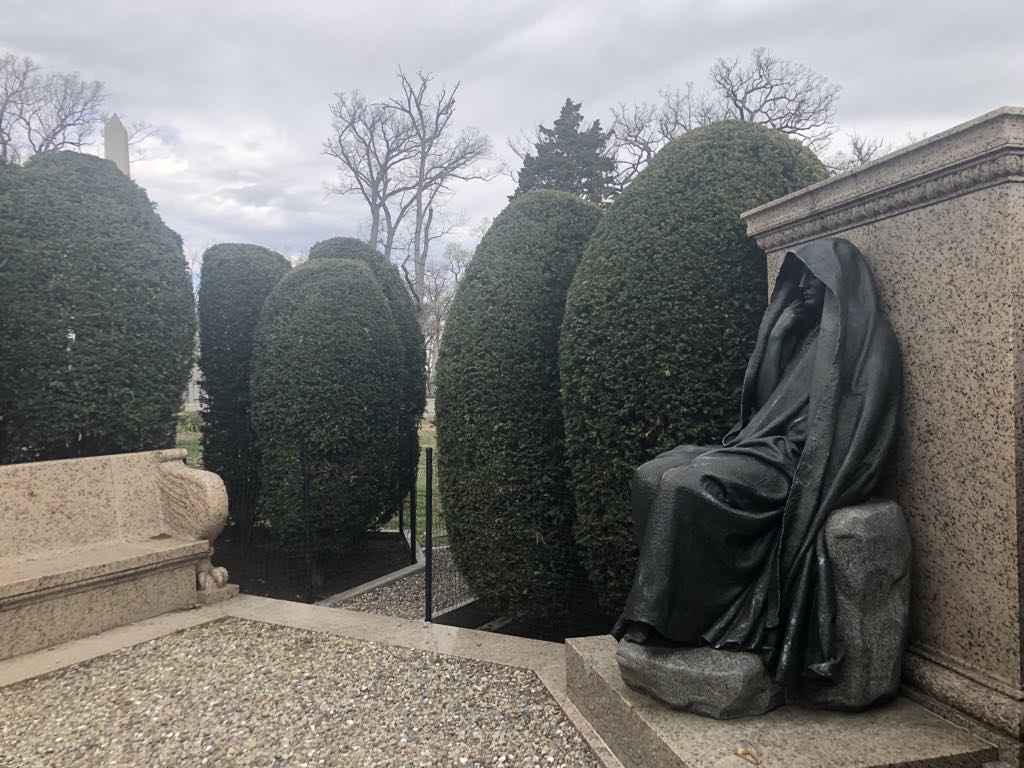
Her burial was ostentatious. He hired celebrated architect Stanford White to design a memorial to mark Clover’s grave. There is a grove of trees with steps leading into the center. There you’ll find a large, curved marble bench that could seat six comfortably. Across the expanse marked by small, tumbled stones, sits Grief.

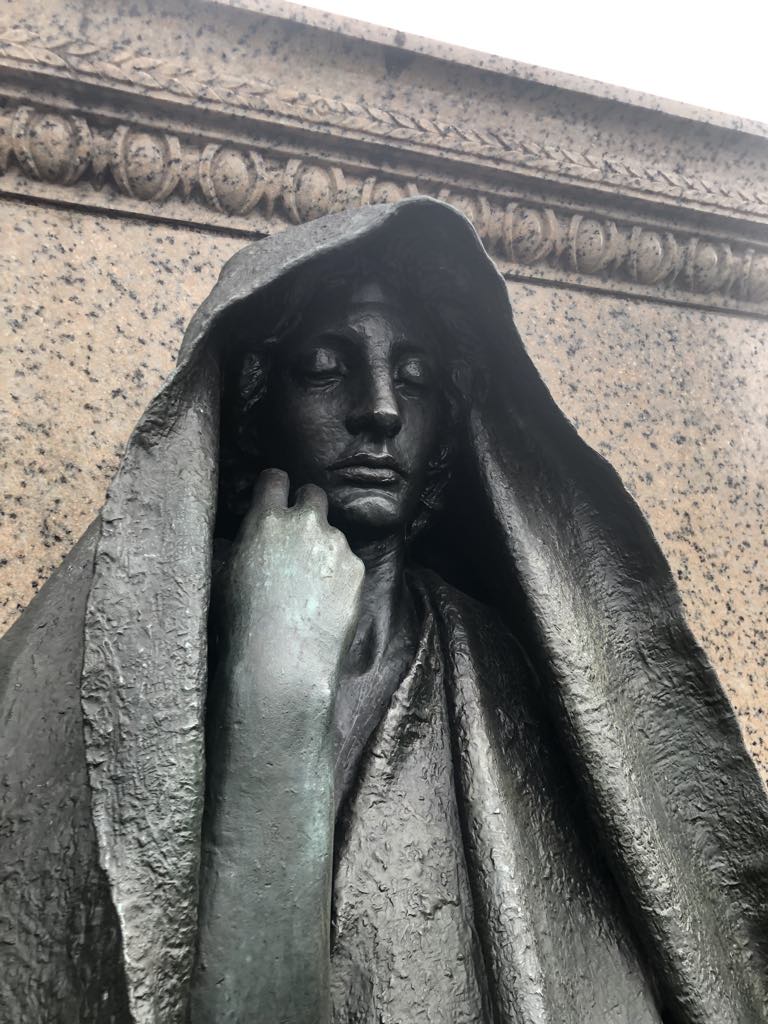
The full name of the statue is The Mystery of the Hereafter and the Peace of God that Passeth Understanding, by Augustus Saint-Gaudens. The newspapers saw that title and said, “We’re going to call it Grief.” The subject of the statue is not Clover Adams. It’s neither male nor female. Its only purpose is to mourn because Henry couldn’t.

As a skeptic, I can’t explain the vibe of that place. It was sad, but it was also kind of frightening, requiring me to push through a lot of fear to get that close-up. Then I did the unthinkable. I stuck around with my sketchbook. I’m going to put a lot of time and care into this one.

Henry Adams built an actual monument on top of the final remains of his beloved wife. Her name is nowhere to be found.

Pi in your Face

I’m a little more lighthearted today, because it is Pi Day. Pi, as you might remember from geometry, is a less-than-rational number, calculated by assuming the cosine of circumgourds to the numfloppens and divining them with the abacusometers, before estimating a riff based on the interginalist figure to the nearest taurudite.

The first three digits that result are 3.14. After that, it’s sheer madness. Apparently, there are human beings out there who can recite it to hundreds of digits because they have something broken in their brains.

14 March, or 3/14 to normal people, is considered Pi Day, when we, as a world, stare in awe at this number, stretching off into infinity. And then we get bored and eat some pie.

That is not why I am celebrating 14 March. I’m celebrating 14 March because of Stephen’s birthday.

The first time I visited Kate in Indiana, I met Steve. The most notable thing about Steve was that he had panache. He was a dork. He knew he was a dork. And he strutted around like Tobey MacGuire in Spider-Man 3. I was dying to be his friend.

By the time I had moved to Bloomington, he had moved onto Cornell with his future wife, Meredith. After law school, they relocated to Alexandria, Virginia, shortly before we moved there. Steve and Meredith helped me feel welcome in a place that was otherwise confusing and lonely.

The first thing you must know about Steve is that he’s always right. If something doesn’t jive, he makes it known. He has a brain the size of a planet, so he probably is right, but if you contradict him, he will give you the benefit of the doubt. He won’t rule anything out if you have evidence. If you don’t know something that is in his wheelhouse, he will tell you. If he doesn’t know, he’ll look it up.

Steve nitpicks like a professional. He pointed out all the flaws in an episode of Justice League as we watched it to the point that the only thing left of the DVD was a smoldering puddle of plastic. When we put in GI Joe: Resolute, and he couldn’t find a single thing wrong with it, I knew I found a new classic.

Somehow, and I’m not sure how, he beta-read one of my Urban Fantasy short stories and returned with a scathing indictment. Some of his criticisms were spot on, and some of them completely missed the point of the story (which means I probably didn’t communicate it as effectively as I could have). Too late, because it got published as is. Suck it, Poindexter.

Steve is also one of the most inviting, attentive, and loyal people I know. I had pushed away all of my friends when I was married, and all the couple friends I’d made disappeared when the marriage was over. Steve, however, assured me he and Meredith weren’t going anywhere, and they took me out to dinner the night I got the news.

Steve laughs at all my jokes. All of them. And on the rare occasion that he doesn’t find it funny, it’s because he doesn’t get it. When I explain it, he laughs. As a nitpicker, his expertise would be greatly appreciated on my latest novel because I think I might have something here. If I don’t, or if something’s not working, he will not hesitate to let me know.

Steve is vibrant, curious, generous, goofy, a little smug, and can beat you to death with a stick. If anyone can and will tell me the technical differences between barrister and lawyer in more than just the Atlantic Ocean, it’s him. I’m honored to be his friend.

Dramatis Personae

Ladies and Gentlemen, the cast of Metromaniacs!

Played by the accomplished Caroline Adams, Lisette the proactive, scheming maid.

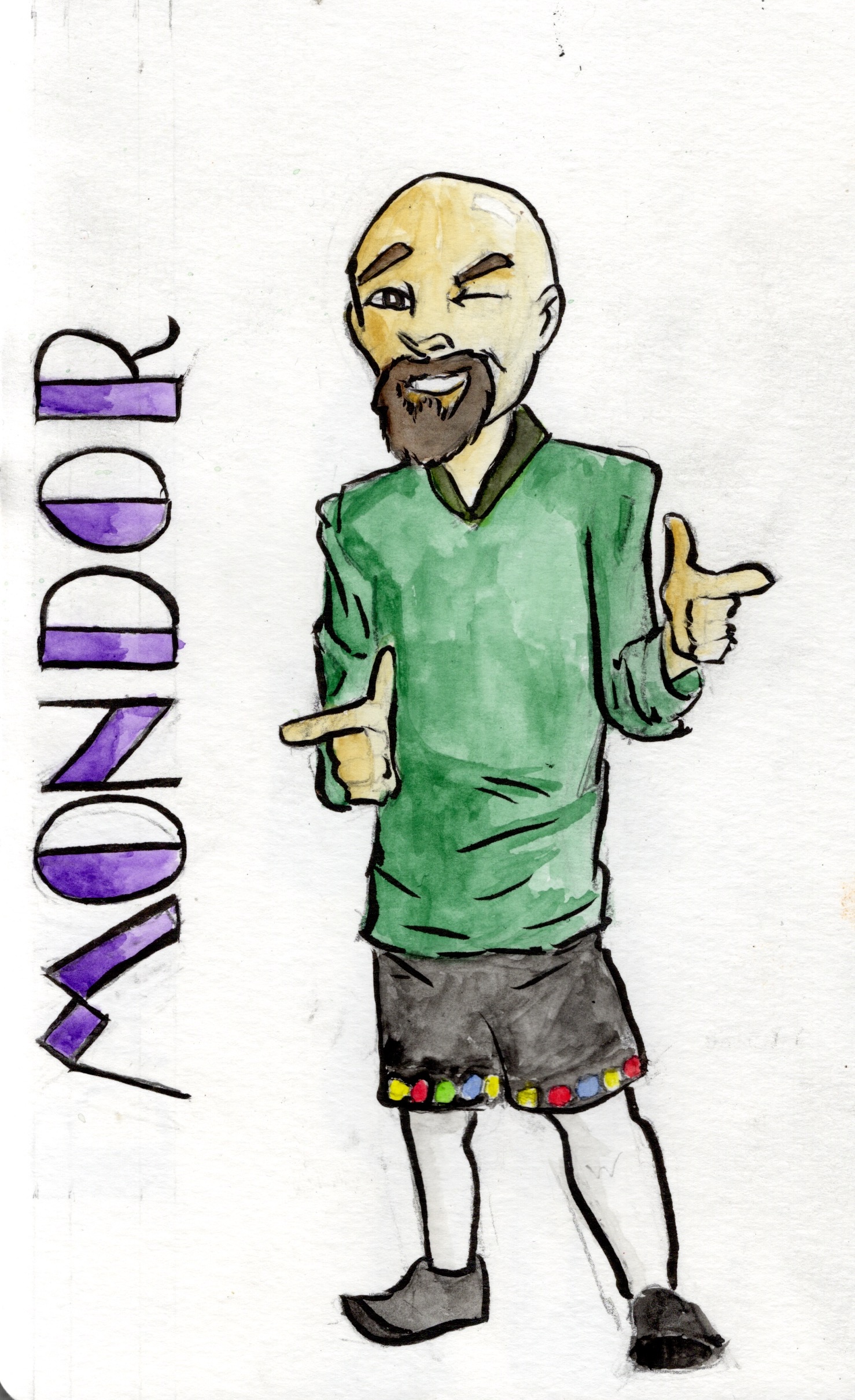
Played by Hanlon Smith-Dorsey, Mondor is a loyal servant with no scruples.

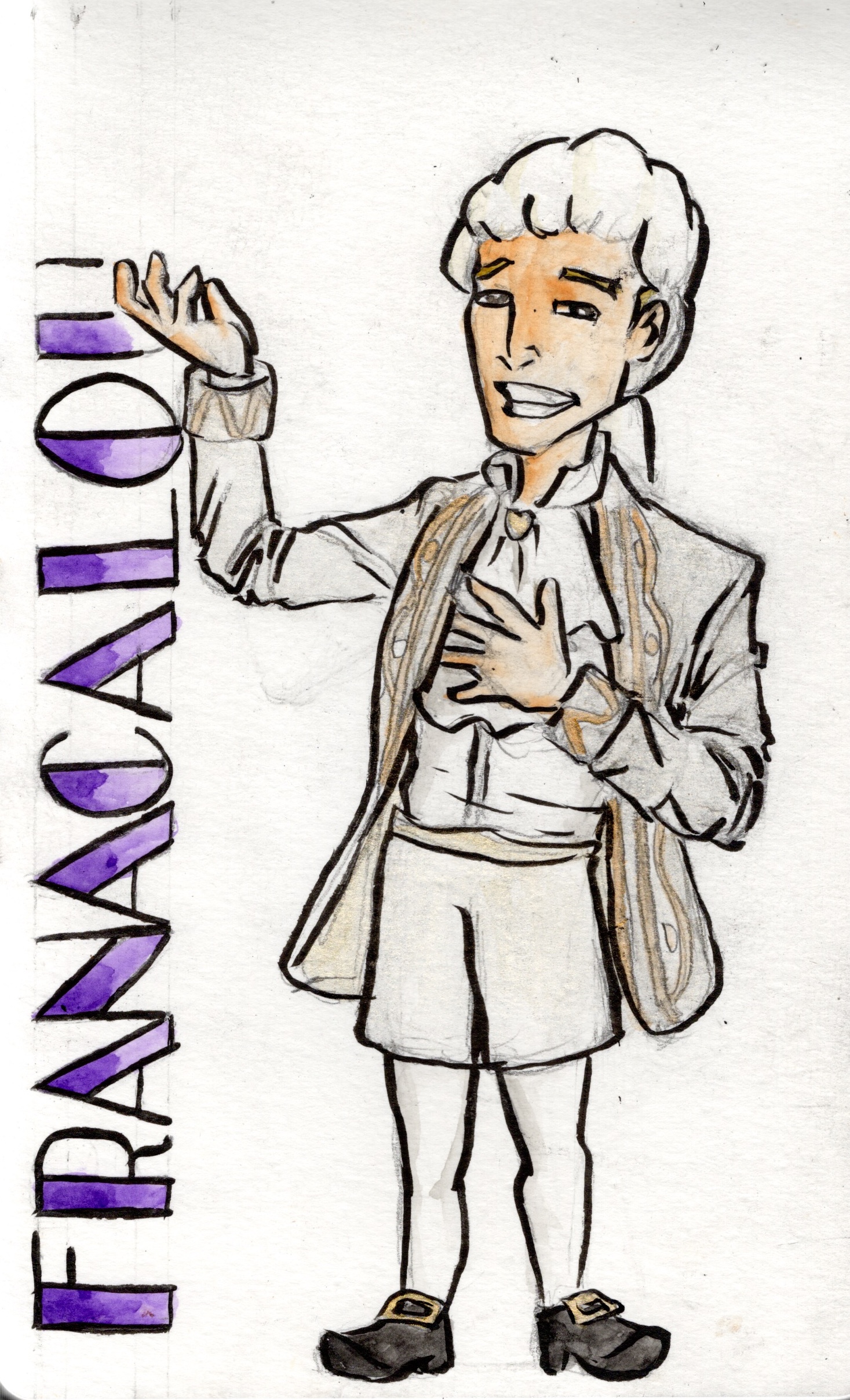
Played by Hart Wood, Franacalou is a lover and creator of drama.

Played by Jane Schecterson, Lucille is, like, yeah, whatever.

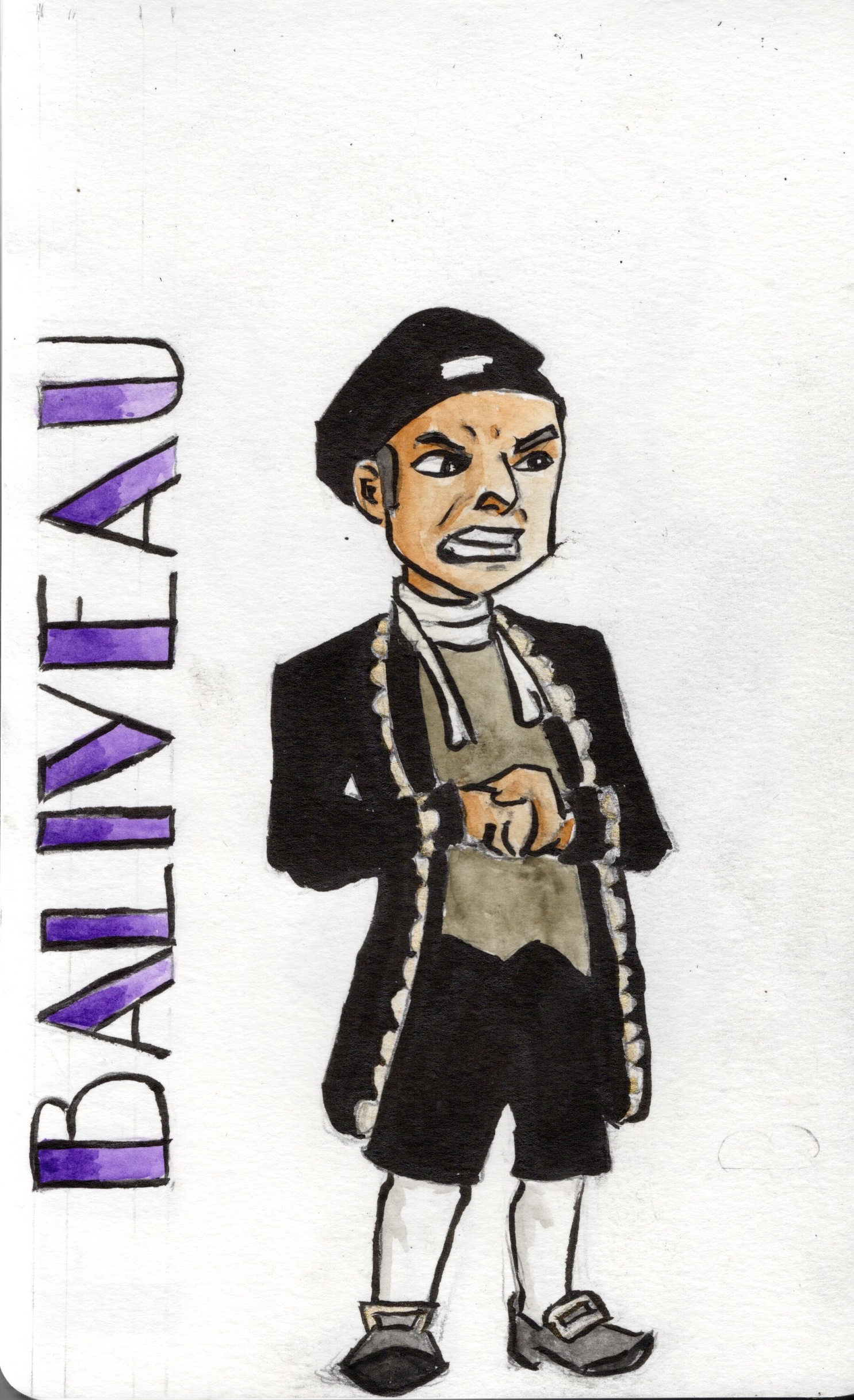
Played by K Sridhar, Baliveau is the very definition of angry uncle.

Played by Oscar Léon, Damis is a romantic, twitchy poet.

Played by Steve Isaac, Dorante is lovesick and star cross’d.

Portrait of an Artist

I still think of my friend several times a day. He’s been gone since the first week of November, and it doesn’t feel like it’s been almost four months. I can’t bring myself to look at a photo of him. I wrote a chapter about him in my premature memoirs (which he read) three years ago, and I can’t bring myself to read it or edit to include the conclusion.

However, I’ve included him as a secondary character in the novel I’m writing, and I’ve done my best to capture what made his personality shine. It helps fill the void he left. It breaks my heart that I can’t share it with him, because there are parts I know he’d laugh his ass off to, and I miss his laugh.

I have wanted to draw and/or paint a picture of him since his death, but it hurts too much. I did this last weekend, and it’s not great. I really screwed up the arms and the color of his hair. Baby steps.

Taking the Bait

When I was employed at the self-publisher in Indiana, a number of cool women worked the front desk. There was Leah, the Leah against whom all future Leahs have been judged. She was escorted from the building by security, and she cut off communication with anyone who ever worked with her, so that ended rather abruptly.

Then there was Isabella. Every photo of her I have in my mind, of her mocha skin and espresso hair, of the flowery sundresses she wore year-round, she is grinning. I don’t know what color her eyes are because I’ve never seen them. She loved meeting everybody, and she traumatized my introverted sister by tackling her in a hug and squealing in her ear, the very first interaction they’d had.

Everything was fun to this woman. She found something to love in everything she could see, hear, feel, smell, or taste, and in every person she met. Isabella was a genuinely sweet and happy person. She was a natural receptionist.

A side-effect of her exuberance was that she dominated conversations. I’m not much of a talker, but I do like to get a word in, so I didn’t hang out with her very much. Still, I loved her presence and her vibe.

That day, in the break room. Chris from HR was examining the crime scene, his assistant Stephanie at his side, poking at a PDA. The Phantom Puker had struck again, and Chris from HR was no closer to catching them.

The pukes had been happening all over both floors of this flat structure, and Chris from HR was going to crack this case. Too bad the Puker knew where all the security cameras were. I rose from my table and stepped out of earshot, catching the last bit of dialogue from that corner: “Find out who had ramen for lunch!”

Even in context, that was pretty messed up, but I was unprepared for what came next. In fact, my deathbed confession will be this sentence fragment, leading a long search for the person who doesn’t remember ever saying it.

Isabella hugged her can of Diet Pepsi and took a quick sip, creating a dramatic pause for her audience. I came in at the middle of the sentence, and she breathlessly said the words that oozed into my ear and soaked my brain.

Sheer momentum kept me going, and I couldn’t hear anything that might put that into context. I don’t remember how I made it back to my desk. Collapsing into my chair, the gears in my head were grinding together, as if you were driving a stick and jumping from first to third.

My Work Wife, Elizabeth, appeared, concerned. “What’s wrong?” she asked. “Do you need to go home? I can tell Dave.”

“What does it mean?” I moaned. “Tell me what it means!”

“What what means?” she replied.

“I can’t tell you,” I groaned. “I have a nosebleed!”

“Oh my God!” she gasped, plucking a issue from the box at her desk. “What did this to you? You know you can tell me anything, Jeremiah. What’s the point of having a work wife if you can’t?”

I hoped not to pass the madness along, but I could live alone with this no longer. “She said.” I breathed. “She said, ‘and then she went back into the fish.’”

“Who was she?”

“I don’t know!”

“What was she doing before she went back into the fish?”

“I don’t know!”

“What was outside of the fish that made returning to it so appealing?”

“I don’t know!”

“What was she doing in the fish in the first place?”

My bloodshot eyes fixated on her as I grabbed her shoulder and shook her. “I! Don’t! Know!”

She brushed my hands off of her. “We’re going to get through this. Just remain calm. Maybe we can ask Isabella what she was talking about.”

“I don’t want her thinking of me as an eavesdropper.”

“Jeremiah,” she said carefully, “this may be the only way you can go on.”

I worked my way downstairs to the front desk, my head pounding, and I waved to get her attention, just in case she was on the phone.

“What’s up, Jeremiah?” she asked, as if Jeremiah gossip was the one thing she’d been waiting for all day.

“I kind of caught part of a story you were telling,” I tried to explain without being a creep. “And you said something that I can’t quite understand.”

Her eyes were wide and eager.

“You said, ‘and then she went back into the fish,’” he told her.

She frowned a huge stage frown. “I don’t remember talking about fish at all today. Sorry!”

I returned upstairs, to my desk, and rested my face on the keyboard. I would never know why someone would return to a fish. I could only speculate. The truth had died that day, and so did a part of me I will always miss.

Spilling the Tooth

I’ve been lucky. I’ve always had great dentists. They’ve always taken care of me, and they and their army of hygienists have always been patient with me. This is a sharp contrast to growing up, because all of my dental hygienists were Navajo moms. For those who don’t know, the only way to survive an encounter with a Navajo mom is to obey.

My dentist in Bloomington was a great guy. I hadn’t been to the dentist for years, not since my wisdom teeth were hacked out of my head. He found some cavities, and I returned to get them drilled and filled.

One of the amenities of this dentist is that he had a TV strapped to the ceiling above the dental chair. Keep in mind, this was 2005. All TVs were CRT and had roughly the mass of a granite boulder the same size. If that thing broke free of its mooring, I’m not exaggerating when I say I would have died.

If I was going to lose my life to this TV, I may as well watch it. I picked up the remote and scrolled it to Comedy Central, where the dumbest show was on. The dumbest show next to Jackass. This was called Trigger Happy TV, and it’s a hidden camera prank show, but with actual wit. I knew, as I selected the show, that I might laugh and get a drill in my cheek, but it would be worth it.

Here’s an example of one of their pranks. The marks, a cute family of four, sits down at a picnic table in the woods. A man sits down at a neighboring table and eats his sandwiches. A trio of grown men in squirrel costumes burst out and drag the man into the woods, kicking and punching him.

However, it was the one where the nun got into a fistfight with a penguin that made my dentist, the drill running, laugh his ass off.

I turned off the TV.

The Power of the Dork Side

When going through my photo albums, I seemed to hit the sweet spot for nostalgia. Most of my friends throughout my history have been larger-than-life, to the point where I sometimes think of them as characters. When it comes to thinking human beings with their own lives separate from me as characters, the one who demands it the most is Jeff.

If I had to sum Jeff up in two words, they would be “Sassy Nerd.” He was the first Hastings College student I met, and I immediately wrote him off. When it came to being geeky, he was only missing tape on his glasses. It didn’t help that his roommate and my first friend, Rick, declared war on him. On the former’s side were an army of Madonna posters. On the latter’s, Reba McIntyre, all fighting for supremacy.

I didn’t think much of Jeff until my family experienced a loss, and Jeff stepped up to help me out. He volunteered to meet me at the airport and drive me back to school, even though said airport was three hours away. Oh, and it turned out that he was hilarious. And really clever. And sincere. And dangerously unhinged.

His brand was Evil Genius. He literally carried around a checklist for conquering the world, and one of the items was, “Befriend Jeremiah Murphy.” He steepled his fingers with even more menace than Mr. Burns, and when he laughed maniacally, he committed to it.

He said things like, “When life hands you dilemmas, make dilemonade.” For a teenager, he had a lot of wisdom, but he usually delivered it in the snarkiest way imaginable.

He would pathologically not swear. This was part of his identity. As part of out schtick, he and I left movies together behaving like the characters, but after Pulp Fiction, he said nothing. No amount of anything could get him to say something profane.

Except once. Late at night, while I was sitting captive behind the Altman front desk, he approached without emotion, and he whispered into my ear, “Don’t fuck with me.” I fell out of my chair. He denied it for all of college, and if I’m guessing, he’d deny it today.

Though he swears now. I have receipts.

For a while, we were a matched set, despite that the two of us couldn’t be more different. We moved in together sophomore year when Rick fled and there was no way Hastings College was going to let me keep my single without paying for it.

It was not smooth sailing, especially because he could make himself even more irritating if he was mad at you, and I was an unmedicated bipolar, but we came out on top. When we went our separate ways, him still in the dorm, me to a college-owned apartment, we parted as good friends. I even called him at random after I’d had a very weird Halloween.

He’s bald now. He didn’t used to be.

Anyway, I’m not good at likenesses, but this catches the vibe.

Dramatis Personae

From preadolescence in Tahlequah, Oklahoma, to Doha, Qatar, I have tended to gravitate toward weirdos. Even Work Rachel, though she came and left my life in a handful of months, was pretty out there. The people in my life are so off-center, and they’re so different, that I can’t help but think of them as characters.

I bring this up because I took the weekend to digitize my photo albums, and I rediscovered my past. And then, I remembered the characters in my life, and characters are meant to be drawn. I don’t plan on turning this into a thing, especially as MY LIKENESSES ARE TERRIBLE.

When I arrived at Hastings College, I didn’t exactly blend in. I was darker colors, plaids, and torn jeans, and the entirety of the Midwest was also plaids, but also a blend of earth tones and pastels. I was alone. Suddenly, someone came along, made an obscene comment about the holes in my jeans, and lured me into his den of filthy degenerates.

For a while, it was amazing. With our newfound freedom, we frolicked in innocent (yet very horny) fun, mostly involving smoking cigarettes indoors. Unfortunately, it didn’t last. We were kids, and we didn’t know better.

We started being really horrible to each other in ways I’ve compartmentalized and would refer to as “toxic,” if I didn’t feel like that word has lost all meaning. We’re not bad people. None of us were. We were young, and we got swept up in the moment.

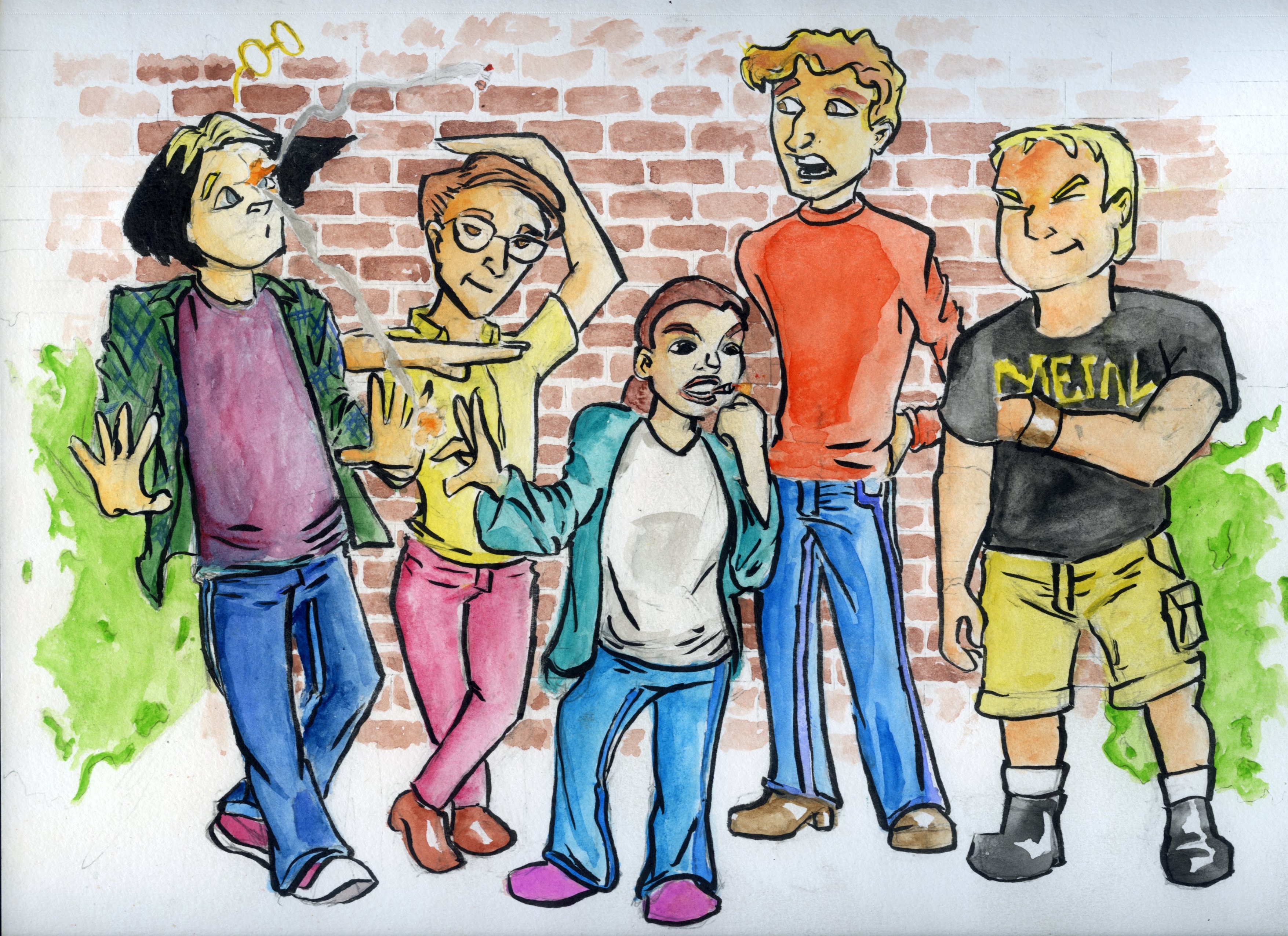
Since running into these photos, I’ve been remembering the early days, before it got complicated, and some of the characters. From left to right:

There’s me, who seemed to be living under a bad-luck curse.

Rick was the one who befouled the reputation of my beloved grunge jeans and brought me into the group of misfits he’d been gathering. Not only was Rick a dancer with moves that could hypnotize a sultan, but he was sincere and curious, two of my favorite traits in a person.

Susan was a pretty, petite young woman who could fell a man by belching on him. She was your drunk uncle at Thanksgiving, without the politics. She was never wrong, and this infuriated me. Sure, she was right most of the time, but did she have to be so belligerent about it? When I met her, she had a Canadian boyfriend, and I said, “Sure.” Then I met him.

If I were dream-casting Greg, I’d go for a young Joan Crawford, smoking a cigarette and waiting for something that piqued her interest. He moved like a marionette, broadly swinging his limbs from one pose to another, going from irritated to overjoyed in an instant. Greg taught me the value of camp and Bea Arthur, without which I would have never appreciated the one good part of the Star Wars Holiday Special.

JJ is difficult to describe. His black T-shirts, sometimes sans sleeves, heavy work boots, and unabashed mullet cast him as a redneck. And he was. He could keep up with Susan on the race to the bottom, and he thought he was the most hilarious person he knew. But sometimes, he’d get really calm, and he’d say something so profound, it would blow the back of your head off. But sometimes, he’d get really calm, and he’d say something so unbelievably stupid, it would blow the back of your head off.

These were just a few of the weirdos I got to know in my early days, far away from home, in a strange land, trapped somewhere between adult and child.

Come on, Baby, Light my Cigarette

When I first started smoking cigarettes in October, 1994, I had a cute, little, red Bic lighter, and it was magical.

At that time of my life, I mostly hung out with Greg, a drag queen in disguise; JJ, the philosopher redneck; and Susan, an old, grouchy gay man in a teenage girl’s body, in Greg’s dorm room. We smoked a lot of cigarettes because it was the nineties, and you could smoke indoors if you wanted to.

For about a month, I always had flame in my pack-pocket (currently my phone-pocket). This was something special because I tended to distribute my lighters in random places with random people, so I always depended on the other cavemen for fire.

What was even more amazing was that, if I had to leave the dorm for a chilly autumn, the lighter was there, in my jacket pocket, always. I never had an excuse not to smoke.

On a day of sadness, my Bic flicked its last. If mid-nineties culture was tipping one over for your homies, I absolutely would have. I loved that fucking lighter. I disposed of it with ceremony.

And yet, when I reached into my jacket pocket a few hours later, the cute, little, red Bic was there, and it still had juice. I thought I’d thrown it out, but it was a strong possibility, even then, my memory of the event failed to correspond with what actually happened.

I didn’t figure it out for a while. On my way to class, I lit a cigarette, returned the lighter to my jacket, and slipped my hand inside my pack-pocket to find another cute, red, little Bic.

The whole time I’d had three identical lighters, and I didn’t have a clue. Maybe something magical did happen here. But the spell was broken, and one-by-one, the remaining Bics disappeared.

I quit smoking 15 May, 2007, four days before I turned thirty-one. I have never stopped loving those triplets.